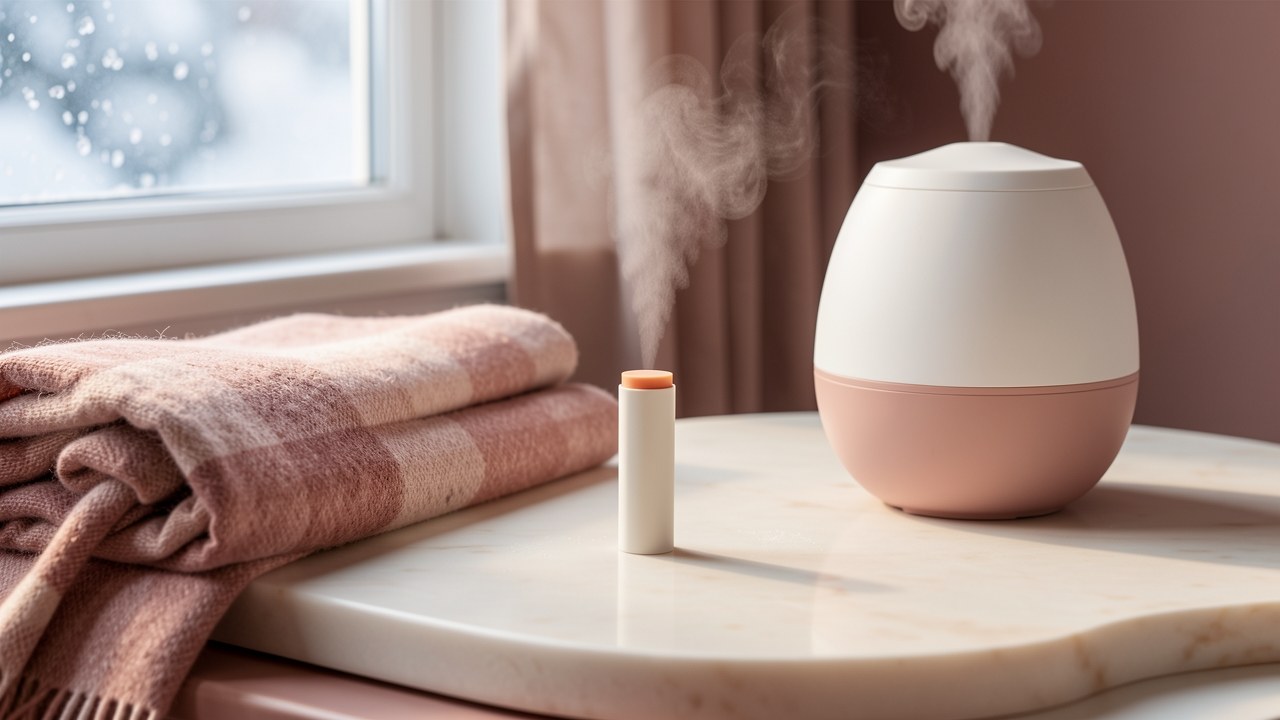
Why cold air, wind, and indoor heating make lips uncomfortable
Lips are built differently from the rest of your skin. They are thinner and more delicate, which leaves them more exposed to dry air, sun, and other irritants. They also lack the oil glands found elsewhere on the body, so they cannot replenish lost moisture on their own the way other skin can.
That difference becomes obvious in winter. Low humidity outdoors and heated air indoors both pull moisture from the surface of the lips, and the result is the tight, red, chapped feeling many people notice as soon as the season turns. Cold weather, wind, indoor heating, air conditioning, and low-humidity environments all draw moisture away from the skin, and lips tend to track the moisture level of the environment around them.
Cracked lips develop when delicate lip skin loses moisture faster than it can replace it. Weather and sun exposure are common contributors, as are dehydration, irritation, and some underlying conditions. None of this means your lips are unusually fragile; it means the environment is asking more of them than usual.
- Thin, delicate surface with less natural protection than other skin
- No oil glands to replenish moisture on their own
- Outdoor low humidity and wind accelerate moisture loss
- Indoor heating and air conditioning dry the air around you
- Lips tend to mirror the moisture level of the environment
Sources: Optima Dermatology, Vaseline, Faces Canada
Product types to favor when the air turns dry
When lips are already stressed by weather, the goal shifts from adding color or flavor to holding moisture in place. Dermatology-informed guidance favors balms and ointments built around occlusive ingredients, which sit on the surface and create a barrier that helps prevent moisture from escaping. Petrolatum is the clearest example and is widely recommended for this job.
The second useful category is humectants, which draw water toward the skin. Applying a humectant first and following it with an occlusive layer is a common approach for keeping lips hydrated and protected. Ingredients such as mineral oil, ceramides, dimethicone, shea butter, cocoa butter, beeswax, and vitamin E appear in lip products for moisturizing or protective effects, and they are reasonable things to look for on a label.
Just as important is what to leave out. Ingredients including camphor, menthol, eucalyptus, fragrance, phenol, salicylic acid, propyl gallate, and flavorings such as cinnamon or citrus can sting or further irritate sensitive, dry lips. A plain, fragrance-free formula is often the more comfortable choice once lips are already chapped.
Texture matters for color, too. Creamy, hydrating, glossy, or satin lipstick formulas tend to feel gentler on sensitive lips than matte finishes do. This is a comfort observation rather than a clinical finding, so treat it as a preference to test rather than a rule.
- Occlusives such as petrolatum create a protective barrier and help prevent moisture loss
- Humectants can be layered underneath an occlusive for added hydration
- Look for mineral oil, ceramides, dimethicone, shea butter, cocoa butter, beeswax, or vitamin E
- Skip camphor, menthol, eucalyptus, fragrance, phenol, salicylic acid, propyl gallate, and strong flavorings when lips are irritated
- Choose creamy, glossy, or satin color over matte when lips feel sensitive
Sources: Optima Dermatology, Be Green Bath and Body, LLC, C.O. Bigelow, Vaseline, Faces Canada
How to layer balm, treatment, and color in the cold
Layering in cold weather is less about a fixed routine and more about order. A thin humectant layer goes on first if you use one, because it needs contact with the lip surface to draw in moisture. An occlusive balm or ointment goes over it to seal that moisture in. Color, if you wear it, comes last, so it does not interfere with the layers underneath.
Timing matters as much as order. Dermatologists recommend applying a non-irritating, fragrance-free moisturizer and lip balm or ointment in the morning, several times through the day, before heading outdoors, and again before bed. Repeating the occlusive layer is what maintains the barrier; a single morning application will not last through a windy afternoon.
An overnight layer is a simple way to close the day. Applying a thick layer of balm or treatment before bed helps seal in moisture while you sleep. If you use a lip product with sun protection during the day, a separate plain occlusive at night keeps the two jobs distinct.
- If using a humectant, apply it first to clean, dry lips.
- Follow with an occlusive balm or ointment to seal in moisture.
- Apply lip color last if you wear it.
- Reapply the occlusive layer several times through the day.
- Add a thicker layer before bed to seal in moisture overnight.
Sources: Optima Dermatology, Be Green Bath and Body, LLC, C.O. Bigelow, Vaseline, Faces Canada
Everyday habits that reduce moisture loss
The habit with the strongest agreement across sources is also the hardest to break: stop licking your lips. Saliva evaporates quickly and leaves lips drier than they were before, and repeated licking can create a cycle of moisture loss and irritation that becomes difficult to break. If you notice yourself doing it, reaching for balm instead is a practical substitute.
Hydration supports the body's moisture levels generally, and drinking enough water through the day helps maintain overall skin hydration. It is worth being realistic about what that does: water supports the system rather than instantly repairing cracked lips, so it works alongside topical care rather than replacing it.
A few environment-level habits help as well. Running a humidifier at home, particularly in the bedroom, adds moisture to indoor air and can reduce the dryness that heated rooms create. Bathing and showering in warm rather than scalding water avoids stripping moisture from skin. Outdoors, covering your lips with a scarf reduces direct exposure to cold wind and helps shield them from moisture loss.
Gentle exfoliation once a week with a soft cloth or mild exfoliant can remove dry flakes, but over-exfoliating can cause micro-tears and irritation. Skip it entirely on lips that are actively cracked or bleeding.
Sun protection is not only a summer concern. Using a lip balm with SPF 30 or higher and reapplying every few hours outdoors helps protect lips from sun exposure, including on bright winter days.
- Replace lip licking with a quick balm application
- Drink water consistently through the day as general support, not as a quick fix
- Run a humidifier, especially in the bedroom
- Take warm rather than scalding showers
- Cover lips with a scarf in cold wind
- Exfoliate gently at most once a week, and not at all on cracked or bleeding lips
- Use a lip balm with SPF 30 or higher and reapply every few hours outdoors
Sources: Optima Dermatology, Be Green Bath and Body, LLC, C.O. Bigelow, Vaseline, Faces Canada, The DERM Center
A transition plan for moving between cold outdoors and dry indoors
Winter days often mean moving between two very different environments, and lips feel both. A short plan for the transitions keeps the routine from being purely reactive.
Before going outside, apply an occlusive layer and cover your lips with a scarf if it is windy. Once you are back indoors, avoid the temptation to lick your lips in response to the temperature change; reapply balm instead. At home, keep a humidifier running in the room where you spend the most time, and keep a balm within reach so reapplying is easy.
At the end of the day, apply a thicker layer before bed. If cracking, bleeding, or irritation continues without relief despite consistent care, that is a reasonable point to have your lips evaluated by a dermatologist.
- Before heading outdoors: apply an occlusive balm, and add a scarf if it is windy.
- On returning indoors: reapply balm rather than licking your lips.
- At home: run a humidifier and keep balm accessible for frequent reapplication.
- Before bed: apply a thicker layer to seal in moisture overnight.
- If cracking, bleeding, or irritation persists despite consistent care: consider seeing a dermatologist.
Sources: Optima Dermatology, Be Green Bath and Body, LLC, C.O. Bigelow, Vaseline, Faces Canada, The DERM Center
A quick seasonal checklist
The adjustments that matter most in cold, dry weather are small and repeatable. Use this as a starting point and adapt it to how your lips actually respond.
- Swap heavily fragranced or tingling balms for plain, fragrance-free formulas.
- Keep an occlusive balm in your bag, at your desk, and by the bed.
- Layer a humectant underneath an occlusive if you want extra hydration.
- Choose creamy or satin color over matte while lips are sensitive.
- Add a humidifier to your main living space or bedroom.
- Reapply SPF 30 or higher lip protection during outdoor time.
- Replace lip licking with a balm application whenever you notice the habit.
Sources: Optima Dermatology, Be Green Bath and Body, LLC, C.O. Bigelow, Vaseline, Faces Canada, The DERM Center
When to stop adjusting and get advice
Most winter lip discomfort responds to consistent barrier care, frequent reapplication, and a few habit changes. But continuing cracking, bleeding, or irritation that does not improve with consistent care may warrant evaluation by a dermatologist.
That is a general threshold rather than a diagnosis. If your lips are painful, bleeding, or not improving despite steady care, professional evaluation is the reasonable next step.
Sources: Optima Dermatology, Vaseline, The DERM Center
Frequently asked questions
Why do my lips get chapped every winter?
Winter stacks several drying forces at once. Lips are thinner and more delicate than other skin and do not have oil glands to replenish moisture on their own. Low humidity outdoors, wind, and heated indoor air all pull moisture from the lip surface, so lips tend to mirror how dry the surrounding environment is. When lip skin loses moisture faster than it can replace it, chapping follows.
Sources: Optima Dermatology, Vaseline, Faces CanadaShould I switch lip products when the season changes?
It is usually worth adjusting rather than replacing everything. In cold, dry conditions, favor occlusive balms and ointments that create a protective barrier, and consider skipping products with camphor, menthol, eucalyptus, fragrance, phenol, salicylic acid, propyl gallate, or strong flavorings if your lips are already irritated. For color, creamy, glossy, or satin formulas tend to feel gentler than matte ones while lips are sensitive.
Sources: Optima Dermatology, C.O. Bigelow, Faces CanadaDoes drinking more water prevent chapped lips?
Water supports the body's overall moisture levels, and drinking enough through the day contributes to general skin hydration. It is not an instant fix for lips that are already cracked. Think of hydration as working alongside topical care, not replacing it: an occlusive balm applied and reapplied through the day is what directly limits moisture loss from the lip surface.
Sources: Optima Dermatology, Vaseline, The DERM CenterIs lip balm with petrolatum better in winter?
Petrolatum is an occlusive, meaning it creates a protective barrier on the surface of the lips and helps prevent moisture from escaping. That makes it a sensible choice when cold air and indoor heating are drying your lips out. It is not the only option; mineral oil, ceramides, dimethicone, shea butter, cocoa butter, beeswax, and vitamin E are also used in lip products for moisturizing or protective effects.
Sources: Optima Dermatology, VaselineShould I exfoliate my lips more often in winter?
No. Gentle exfoliation about once a week with a soft cloth or mild exfoliant can remove dry flakes, but over-exfoliating can cause micro-tears and irritation. Avoid exfoliating lips that are actively cracked or bleeding, and lean on balm and barrier protection instead.
Sources: Be Green Bath and Body, LLC, C.O. Bigelow, Vaseline, Faces CanadaDo I need sun protection for my lips in winter?
Sun exposure affects lips year-round, not only in summer. Using a lip balm with SPF 30 or higher and reapplying every few hours outdoors helps protect them. If you prefer a plain occlusive at night, keeping sun protection as a daytime layer keeps the two jobs separate.
Sources: Optima Dermatology, Vaseline, Faces CanadaWill a humidifier help my lips in winter?
Running a humidifier at home, particularly in the bedroom, adds moisture to indoor air and can help reduce the dryness that heated rooms create. It works best as part of a routine that also includes frequent reapplication of an occlusive balm, since the balm is what directly limits moisture loss from the lip surface.
Sources: Optima Dermatology, The DERM CenterHow do I stop licking my lips when they feel dry?
The most practical substitute is to reach for balm whenever you notice the urge. Saliva evaporates quickly and leaves lips drier than before, and repeated licking can build a cycle of moisture loss and irritation that is hard to break. Carrying a balm you like in your bag, at your desk, and by your bed makes the swap easy to repeat.
Sources: Optima Dermatology, Be Green Bath and Body, LLC, C.O. Bigelow, Vaseline, The DERM CenterSources
- Dermatologist Tips for Hydrated Lips and Healthy Skin — Optima Dermatology
- Winter Lip Care Tips for Dry, Cracked Lips — Be Green Bath and Body, LLC
- The Apothecary Guide to Cold Weather Lip Care — C.O. Bigelow
- How to Heal Severely Cracked Lips: A Guide to Treatment and Prevention — Vaseline
- Effective Ways to Prevent Dry, Chapped Lips This Winter — Faces Canada
- How can I prevent chapped lips in the winter? — The DERM Center