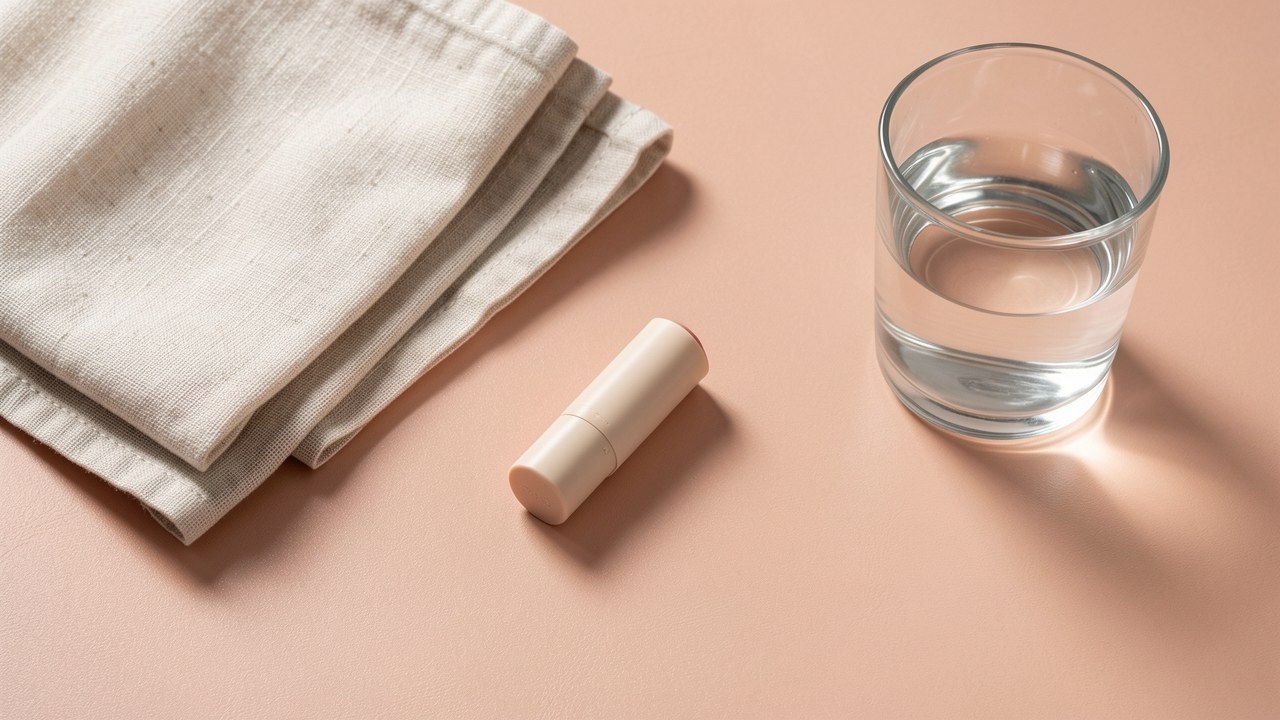
What healthy everyday lip care looks like
Good lip care is less about buying the right product and more about repeating a few simple steps. Lips do not contain oil glands like the rest of the skin, which makes them vulnerable to drying and chapping, and they have a thin barrier that makes them more prone to moisture loss, flaking, and cracking than skin elsewhere on the body.
A basic routine comes down to three actions: hydrating with lip balm, exfoliating only when needed, and protecting the lips. Dermatology-oriented guidance reduces the routine further to hydration and exfoliation, with protection layered on top for daytime and overnight use.
The goal is comfort, not perfection. If your lips feel soft and you are not constantly reaching for balm, your routine is doing its job. If they feel tight, rough, or sore, the routine usually needs a small adjustment rather than a complete overhaul.
- Hydrate: apply a moisturizing lip balm, including the corners of the mouth.
- Exfoliate: only when lips are dry and flaky, roughly once or twice a week.
- Protect: seal in moisture, and use sun protection during the day.
- Treat lips gently: avoid harsh rubbing or heavy pressure when applying products.
Sources: Healthline, The Skin Cancer Foundation, Ethique
Why lips need their own routine
Lips behave differently from the rest of your skin. They lack the oil glands that help keep other areas supple, and their barrier is thin, so moisture escapes more readily. That combination explains why lips dry out, chap, and flake easily, especially in dry air or after time outdoors.
Because the barrier is delicate, it is easier to irritate than to repair. Harsh rubbing or too much pressure when applying or removing products can make it harder for lips to maintain their barrier function, which is why every step below leans toward gentleness over intensity.
This is also why lip care is a habit rather than a one-time fix. Reapplying balm through the day, and again before bed, replaces moisture that the lip barrier cannot hold on its own.
Sources: Healthline, The Skin Cancer Foundation, Ethique
Morning routine: cleanse, hydrate, protect
Morning is the simplest part of the routine. Rinse your lips with water as part of washing your face, then apply a moisturizing lip balm. There is no need for a dedicated cleansing product or for scrubbing: the aim is to start the day with a comfortable, hydrated surface.
Protection is the step most people skip. Lips receive a lot of sun exposure and are a common spot for skin cancers, particularly the lower lip, so a daytime lip product should include sunscreen with SPF 30 or higher. If the moisturizer you already use does not contain sunscreen, follow it with a lip balm that does.
- Rinse lips with water while washing your face.
- Apply a moisturizing lip balm liberally, including the corners of the mouth.
- Follow with an SPF 30 or higher lip product if your balm does not already contain sunscreen.
- Reapply sun-protective lip product at least every two hours when you are outside, and after eating or drinking.
Sources: Healthline, The Skin Cancer Foundation, Ethique
Throughout-the-day habits and reapplication
A hydrating lip product is typically used two to four times per day, and people with very dry lips or eczema may need to use it more often. Rather than counting applications, treat dryness as the signal: apply balm whenever lips feel dry.
If you are outdoors, sun protection sets its own schedule. Sun-protective lip product should be reapplied at least every two hours, especially after eating or drinking, because both remove product from the lips.
One habit works against all of this: licking your lips. It feels soothing for a moment but leads to more dryness rather than relief, because the moisture evaporates and leaves the lip surface drier than before. Keep balm within reach so licking is not the easy option.
- Apply balm whenever lips feel dry; common guidance is two to four times per day.
- Reapply SPF lip product at least every two hours outdoors and after eating or drinking.
- Substitute balm for lip licking, which worsens dryness.
- Keep a balm in a bag, desk, or car so reapplication stays easy.
Sources: Healthline, The Skin Cancer Foundation, Ethique
Evening routine: gentle care and overnight protection
Evening is when gentle exfoliation fits, and only if your lips are dry and flaky. Gently remove flaking skin using a lip scrub, a soft washcloth, or a mild exfoliant formulated for lips, then apply a hydrating balm. Avoid harsh rubbing or too much pressure.
If your lips are healthy, exfoliation is not necessary; it is mainly useful when there is flaking skin to remove. Over-exfoliating can damage lips and leave them sore, raw, and more dry or uncomfortable, so restraint matters more than frequency.
Finish the day by applying lip balm again just before bedtime. This provides an overnight hydration boost and acts as the final protective step, sealing in moisture while you sleep.
- If lips are flaky, exfoliate gently — no more than once or twice a week.
- Apply a hydrating balm immediately after exfoliating.
- Apply balm once more just before bed as an overnight protective layer.
Sources: Healthline, The Skin Cancer Foundation, Ethique
How often each step belongs in your routine
The table below summarizes typical frequency guidance for the three core steps. These are general ranges, not clinical rules, and very dry lips may need more frequent hydration.
| Step | What it involves | Typical frequency | Cautions |
|---|---|---|---|
| Hydrate with lip balm | Apply a moisturizing balm liberally over the lips, including the corners | Two to four times per day; more for very dry lips or eczema | Do not use lip licking as a substitute for balm |
| Exfoliate | Gently remove flaking skin with a scrub, soft washcloth, or mild lip exfoliant, then apply balm | One to two times per week, and only when lips are dry and flaky | Over-exfoliation can leave lips sore, raw, and more dry |
| Protect and seal | Apply a final moisturizing layer; use SPF 30 or higher during the day | Balm as needed and before bed; SPF reapplied at least every two hours outdoors | Harsh rubbing or heavy pressure can irritate the lip barrier |
Sources: Healthline, The Skin Cancer Foundation, Ethique
How to tell whether your routine is working
The clearest sign of a working routine is comfort. Lips should feel soft rather than tight, and you should not feel the need to lick them or apply balm every few minutes. Flaking should be occasional rather than constant.
If you are exfoliating more than once or twice a week and lips still feel rough, the problem is usually dryness rather than dead skin. In that case, increase hydration and protection and reduce exfoliation, because over-exfoliation makes it harder for lips to maintain their barrier function.
If lips feel raw, sore, or sensitive, back off the abrasive steps first. Gentle care plus consistent balm is the baseline; anything extra should be added only when it clearly helps.
- Working well: lips feel comfortable, flaking is occasional, balm lasts.
- Needs adjustment: constant dryness despite frequent balm, or soreness after exfoliating.
- First fix: more hydration and protection, less scrubbing.
Sources: Healthline, The Skin Cancer Foundation, Ethique
Everyday habits that may work against your lips
Several ordinary habits quietly undermine lip care. Licking is the most common: it leads to more dryness rather than relieving it, and repeated licking can encourage yeast build-up on the lips, which may lead to a condition called angular cheilitis — painful inflammation at the corners of the mouth.
Over-exfoliating is the second. Scrubbing lips frequently, or with too much pressure, can make them sore and raw and leave them less able to hold moisture. Exfoliation is best reserved for when lips are actually flaky.
Skipping sun protection is the third. Because lips get substantial sun exposure and are a common site for skin cancers, going without an SPF lip product during the day leaves them unprotected. Choose products that meet a recognized sun-protection standard where you can; The Skin Cancer Foundation awards its Seal of Recommendation to sun-protective products that meet the standards of its Photobiology Committee.
- Licking lips instead of applying balm.
- Exfoliating daily or scrubbing hard.
- Leaving the house without SPF on the lips.
- Using harsh rubbing or heavy pressure when applying or removing products.
Sources: Healthline, The Skin Cancer Foundation, Ethique
When to adjust your routine vs. seek professional advice
Most lip dryness responds to the basics: hydrate more often, protect during the day, exfoliate less, and stop licking. If a change makes lips more comfortable within a short period, keep it; if lips become sore or raw, remove the abrasive step and return to balm alone.
Some situations are worth discussing with a clinician rather than troubleshooting at home. Persistent cracking at the corners of the mouth, sores that do not heal, or lips that stay painful or raw despite gentle care are reasons to seek professional advice. This guide covers everyday care and does not replace an individual assessment.
If you have a skin condition such as eczema that affects your lips, frequency guidance for balm may not match your needs, and a clinician can advise on a routine suited to your skin.
- Adjust at home: increase hydration, reduce exfoliation, stop licking, add SPF.
- Seek advice: painful cracking at the mouth corners, non-healing sores, or lips that stay raw despite gentle care.
- Ask a clinician if a skin condition such as eczema is involved.
Sources: Healthline, The Skin Cancer Foundation
Frequently asked questions
Is lip balm enough on its own?
For many people, consistent balm use covers most of what lips need day to day, because hydration is the core of a basic routine. Two things are worth adding. During the day, lips get substantial sun exposure and are a common spot for skin cancers, so a daytime product with SPF 30 or higher matters when your balm does not already include sunscreen. And exfoliation is occasional rather than daily: it is useful mainly when lips are dry and flaky, not as a permanent step.
Sources: Healthline, The Skin Cancer Foundation, EthiqueShould I exfoliate my lips every day?
No. General guidance is to exfoliate only one to two times per week, and only when lips are dry and flaky. If your lips are healthy, exfoliation is not necessary at all. Over-exfoliating can leave lips sore, raw, and more dry or uncomfortable, and harsh scrubbing can make it harder for lips to maintain their barrier function.
Sources: Healthline, The Skin Cancer Foundation, EthiqueDoes drinking water fix dry lips?
Drinking water supports overall hydration, but dry lips are largely a barrier problem: lips lack oil glands and have a thin barrier, so moisture escapes quickly no matter how much you drink. That is why topical balm and protection do most of the work in a lip care routine, and why licking your lips makes dryness worse rather than better.
Sources: Healthline, The Skin Cancer Foundation, EthiqueHow many times a day should I care for my lips?
A practical pattern is to apply balm in the morning, reapply as needed through the day, and apply once more before bed. A hydrating lip product is typically used two to four times per day, and very dry lips or lips affected by eczema may need more frequent application. If you are outdoors, reapply sun-protective lip product at least every two hours and after eating or drinking.
Sources: Healthline, The Skin Cancer FoundationSources
- Lip Care Routine 101: Get Your Perfect Pucker with These Expert Tips — Healthline
- 5 Tips for Taking Care of Your Lips — The Skin Cancer Foundation
- Lip Care Routine: The Ultimate Guide — Ethique