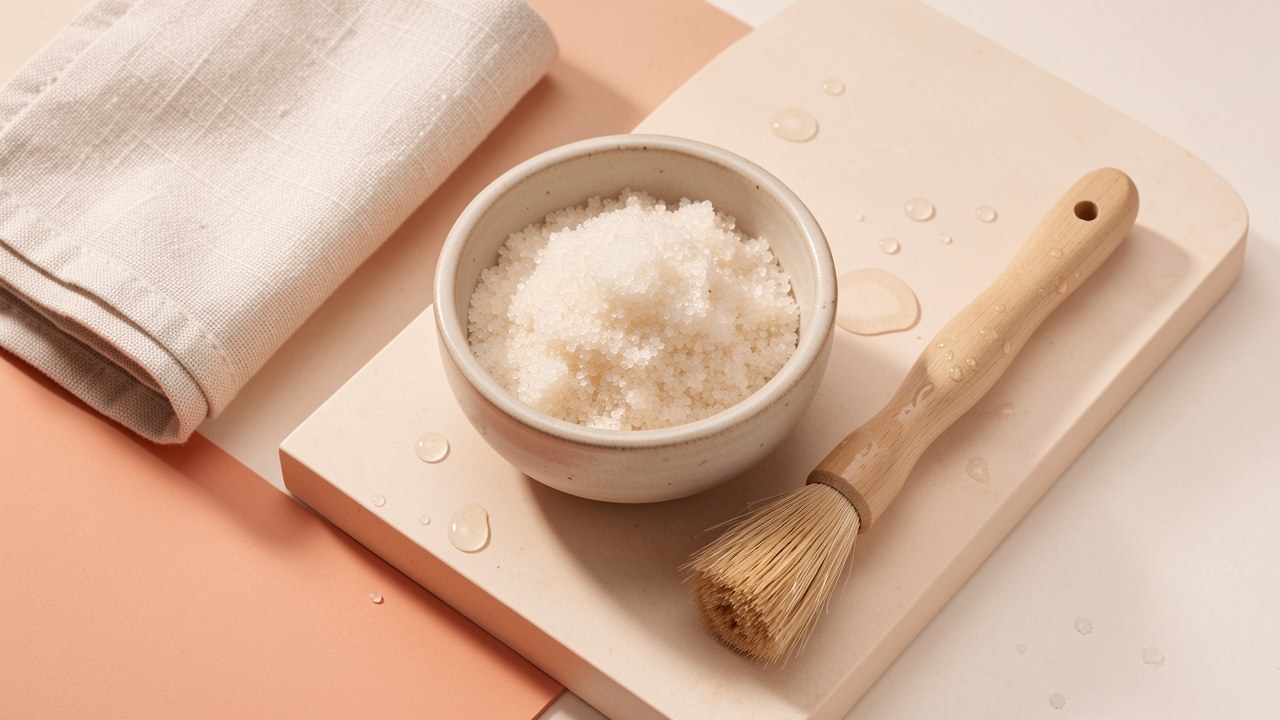
When gentle exfoliation helps and when to avoid it
Gentle lip exfoliation removes dead, flaky surface cells so lips feel smoother and softer. It can also help a balm or lip mask absorb more evenly, and it creates a smoother base for lipstick.
The lip area is much thinner than skin elsewhere on the body and does not have oil glands, which is why it dries out faster and deserves a lighter touch than face or body exfoliation.
- Helpful when lips look flaky or feel rough and there is no broken skin.
- Helpful before applying lipstick when you want a smoother surface.
- Avoid when lips have open cuts, are sunburned, raw, severely chapped or cracked, or have cold sores.
- Avoid when lips are split or bleeding, and wait until they have healed.
- If lips are stinging, burning or visibly irritated, skip exfoliation and focus on moisturizing and healing first.
Sources: Vaseline (Unilever), Skincare.com by L'Oréal, Golden Poppy, Tatcha, Dermasuri
Choosing between a sugar scrub, a damp cloth, and a soft brush
Most lip exfoliation methods fall into a few practical categories. A sugar scrub uses fine particles in a creamy or oily base and is massaged over damp lips. A damp cloth can add gentle friction and is also a simple way to dampen lips before a scrub. A clean soft-bristled toothbrush is a quick manual option. Chemical exfoliating lip scrubs use acids or enzymes instead of granules and do not require rubbing.
Texture matters. Coarse scrubs generally use larger particles such as sugar or salt, while finely milled sugars tend to feel gentler on the lips. Salt and body scrubs are not recommended for lips because the skin there is thin and sensitive.
| Method | How it works | Typical use | Key caution |
|---|---|---|---|
| Sugar scrub (DIY or store-bought) | Fine sugar particles in a creamy or oily base | Apply to damp lips and massage gently in circles with light pressure; supplied durations range from about 10–20 seconds to about 30 seconds to up to 1–2 minutes | Avoid on open cuts, sunburned, raw or severely cracked lips; overuse can irritate and strip natural oils |
| Damp cloth or water-only friction | Moisture plus light friction | Mainly described as a way to dampen lips before applying a lip scrub | Stay gentle and avoid over-exfoliating; no method-specific caution beyond that |
| Soft-bristled toothbrush | Light manual brushing on damp lips | Wet a clean soft-bristled brush and lightly brush for about 30 seconds, then rinse and gently dry | Do not press hard; use a soft-bristled brush to avoid irritation |
| Chemical exfoliating lip scrub (AHA/BHA, fruit and flower acids or enzymes) | Acids or enzymes loosen the top layer; smooth, serum-like texture, no granules | No scrubbing required; acid-based products are advised for night use because of sun sensitivity | Sun exposure after chemical exfoliation is the main concern; increase sun protection |
Sources: Vaseline (Unilever), NBC News Select, Skincare.com by L'Oréal, Golden Poppy, Dermasuri
Step-by-step: gentle exfoliation with pressure and timing guidance
The exact time and pressure vary by product and by how your lips feel. Use the shorter end of the range when lips are sensitive, and stop early if you feel any stinging or burning. The steps below combine the technique described across consumer and dermatologist-quoted guidance.
- Dampen lips with water or a damp cloth to reduce abrasive friction.
- Apply a small amount of scrub; a pea-sized amount is a useful starting point.
- Massage gently in small circular motions with light pressure.
- Keep it brief: roughly 30 seconds is a common target, and some product instructions say 10–20 seconds while some publisher guidance allows up to 1–2 minutes. Choose the shorter time if your lips are sensitive.
- Rinse with lukewarm water rather than hot water.
- Pat dry gently with a soft cloth. Do not rub.
- Apply a repairing balm or petroleum jelly right away to seal in moisture.
Sources: Vaseline (Unilever), Skincare.com by L'Oréal, Dermasuri
signs to pause exfoliation
Consumer guidance across several sources converges on exfoliating lips roughly once or twice a week, or as needed when lips look visibly flaky. One dermatologist quoted in a news article suggests two to three times a week in summer and one to two times a week in winter to avoid irritation, and one commercial product page gives a broader range of one to three times weekly. Because the guidance varies, treat these as starting points and adjust to your own tolerance.
Over-exfoliation can irritate lips, strip natural oils and lead to more dryness. Stop and give lips a break if you notice irritation, burning, or increased dryness. One dermatologist-quoted source describes a recovery approach of avoiding lip scrub for two to four weeks after over-exfoliation and using simple hydrators such as petroleum jelly and lip balm with sun protection, while avoiding licking the lips.
- Pause if lips sting, burn or feel more irritated after exfoliating.
- Pause if dryness or flaking gets worse instead of better.
- Pause if lips become sensitive in the sun after a chemical exfoliating scrub.
- Avoid exfoliating lips that are split, bleeding, sunburned, raw, severely chapped, or have cold sores.
- When in doubt, skip a session and focus on balm and barrier care.
Sources: Vaseline (Unilever), NBC News Select, Skincare.com by L'Oréal, Golden Poppy, Dermasuri
Aftercare with balm or mask after exfoliating
After exfoliation, hydration is not optional. Exfoliation can strip lips of natural oils, so a rich hydrating treatment or balm should always follow. A repairing lip balm or petroleum jelly helps seal in moisture and protect the newly revealed surface.
If you prefer a lip mask, apply it after exfoliation as part of the same session. Keep the rest of the routine simple: avoid lip licking, and during the day use a balm with sun protection when you will be outdoors.
- Apply a repairing balm or petroleum jelly immediately after exfoliating.
- Consider a hydrating lip mask for an extra layer of moisture.
- Use a lip balm with sun protection during the day, especially after chemical exfoliation.
- Avoid licking your lips, which can worsen dryness.
- Reapply balm as needed through the day.
Sources: Vaseline (Unilever), NBC News Select, Skincare.com by L'Oréal, Golden Poppy, Dermasuri
Common mistakes to avoid
The most common mistake is scrubbing lips that are already cracked, split, bleeding, sunburned or raw. That can make irritation worse and delay healing. Another frequent error is using body scrub or harsh abrasives such as coarse salt on the lips, which is too rough for thin lip skin.
Over-scrubbing is the next pitfall. Longer or more frequent sessions do not speed up results; they can strip natural oils and increase dryness. Pressing hard, using a stiff brush, or exfoliating several days in a row all fall into the same category.
Finally, do not skip aftercare. Exfoliating without following up with a balm or mask leaves lips vulnerable. If you are not sure whether exfoliation is appropriate, moisturizing and healing come first.
- Scrubbing cracked, broken or bleeding lips.
- Using body scrub or harsh abrasives on the lips.
- Pressing hard or scrubbing for too long.
- Exfoliating too often, such as several days in a row.
- Skipping a repairing balm or mask afterward.
- Licking lips to soothe them instead of using balm.
Sources: Vaseline (Unilever), Skincare.com by L'Oréal, Golden Poppy, Dermasuri
Frequently asked questions
How often is it safe to exfoliate lips?
Consumer guidance generally converges on about once or twice a week, or as needed when lips look visibly flaky. One dermatologist quoted in a news article suggests two to three times a week in summer and one to two times a week in winter to avoid irritation. Adjust based on how your lips feel, and stop if you notice stinging, burning or increased dryness.
Sources: Vaseline (Unilever), NBC News Select, Skincare.com by L'Oréal, Golden Poppy, DermasuriCan I exfoliate lips with a toothbrush?
A clean soft-bristled toothbrush can be used on damp lips with light pressure for about 30 seconds, then rinsed and gently dried. Use a soft brush, do not press hard, and keep the same frequency limits as other physical exfoliation methods. This is a consumer method, not a clinical recommendation.
Sources: Golden PoppyShould I exfoliate before applying lipstick?
Gentle exfoliation can create a smoother base for even lipstick application, so it can be done before makeup if your lips are not cracked or irritated. Keep the session short and follow with a balm so the surface is not left dry. If lips are raw or broken, skip exfoliation and use balm instead.
Sources: Vaseline (Unilever), Golden Poppy, Skincare.com by L'OréalWhat should I do if my lips sting after exfoliating?
Stop exfoliating and give your lips a break. One dermatologist-quoted source describes avoiding lip scrub for two to four weeks after over-exfoliation and using simple hydrators such as petroleum jelly and lip balm with sun protection, while avoiding licking the lips. If stinging continues or worsens, or if lips are cracked or bleeding, seek advice from a healthcare professional.
Sources: NBC News SelectSources
- Achieve Smooth, Healthy Lips: Your Guide to Using a Lip Scrub — Vaseline (Unilever)
- The best lip scrubs for dry, flaky lips, according to dermatologists — NBC News Select
- How to Use a Lip Scrub Properly and Effectively — Skincare.com by L'Oréal
- Lip Scrub for Exfoliation: Why It's Important and How to Do It Right — Golden Poppy
- Body Scrub Glove + Sugar Lip Scrub — Dermasuri
- The Many Benefits of Lip Scrub — Tatcha
- Lip Scrub Benefits for Softer, Smoother Lips — Dermasuri