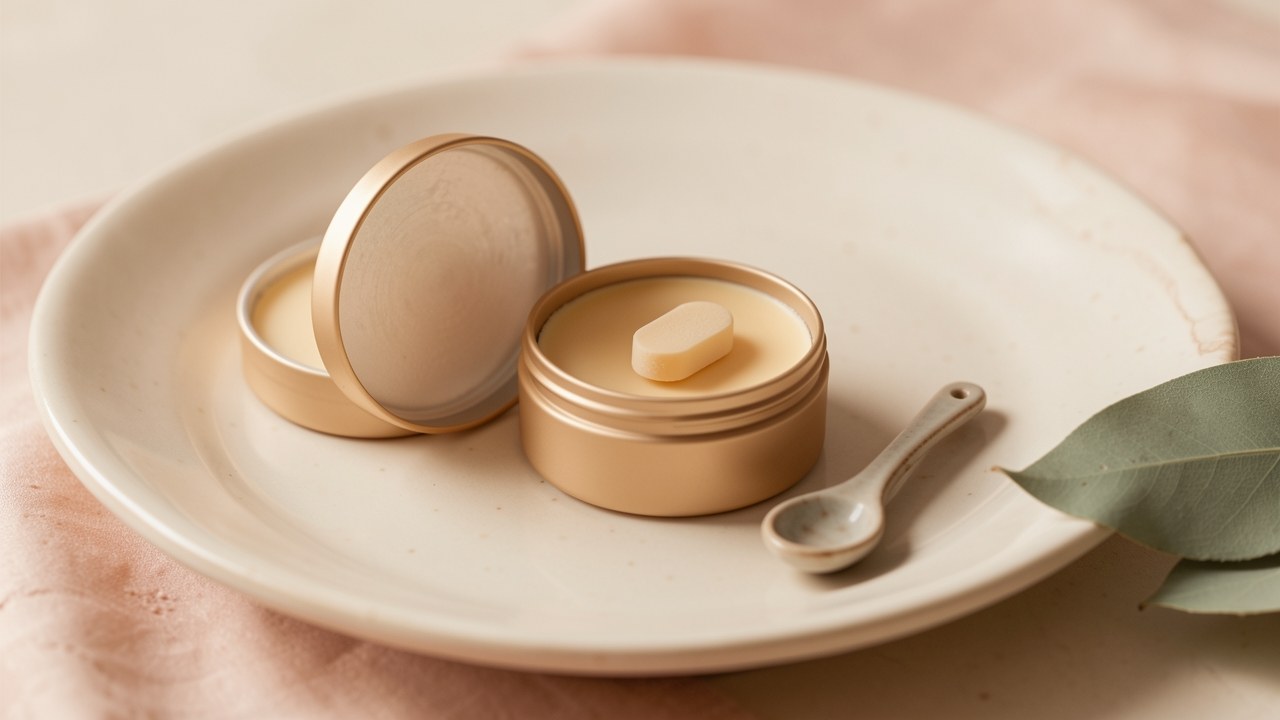
What lip balm is and what it does on the lip surface
Lip balm is a topical ointment typically made from wax, oil and other emollients, used to moisturize and protect the lips. Because lips lack sebaceous glands, they are naturally prone to drying, cracking and chapping, especially in low-humidity environments, cold climates and air-conditioned spaces.
The American Academy of Dermatology recommends regular application of moisturizing lip balm as a preventive and therapeutic measure for chapped lips. A balm works mainly by slowing water loss from the lip surface and by cushioning it against wind, cold and dry indoor air.
- Lips depend on outside moisture because they do not produce their own oil.
- A balm can reduce that moisture loss and create a softer surface.
- Regular application is the habit the AAD recommends, not a one-time fix.
Sources: Persistence Market Research, Riverchase Dermatology
Occlusive, emollient and humectant roles in balm formulas
Most balms mix three kinds of ingredients, and the balance between them explains why two balms can feel very different. Occlusives form a protective layer that seals in moisture and shields the lip surface from cold and wind, but can feel heavy; beeswax and petrolatum are common examples. Emollients such as shea butter and jojoba oil fill gaps between skin cells and help retain moisture. Humectants such as glycerin and hyaluronic acid attract water.
The base also changes the feel. Petrolatum forms a heavy seal and can sometimes feel greasy or sit on top of the skin, while beeswax forms a firmer, breathable barrier with a less slick finish. When you read a label, checking whether the first three to five ingredients are natural waxes or oils is a common way to assess a balm's base quality.
- Occlusive: seals moisture in; examples include petrolatum and beeswax.
- Emollient: smooths and fills gaps; examples include shea butter and jojoba oil.
- Humectant: attracts water; examples include glycerin and hyaluronic acid.
- Base choice changes the finish, from heavy and protective to firm and breathable.
Sources: Persistence Market Research, Honeybalm
How to apply balm for all-day comfort and layering under color
A thin, even layer applied before you leave the house is usually more comfortable than a heavy coat applied only after lips already feel tight. Reapply when lips feel dry rather than on a fixed clock, and smooth the balm across the full lip, including the corners where chapping often starts.
For layering under lipstick, let the balm settle for a moment so it does not make the color slide. A lighter balm or a thin layer works better under most lipsticks than a heavy occlusive coat; a heavier balm is easier to wear on its own or overnight.
- Start with clean, dry lips so the balm can sit evenly.
- Apply a thin layer across the upper and lower lip and at the corners.
- Wait a moment before adding lipstick if you want the color to stay in place.
- Reapply during the day whenever lips feel dry, not on a strict schedule.
Sources: Persistence Market Research, Riverchase Dermatology
Stick, pot, tube and squeeze formats compared for daily use
Format is mostly about habit. A stick is quick and clean to use on the go, which makes it the easiest format to reapply during the day. A pot or jar-style balm lets you take a thicker layer and is often used at home or overnight, though it requires clean fingers or a small spatula. A tube or squeeze format sits between the two: it can deliver a softer, richer balm without the need to dip into a pot.
If you tend to reapply often, a stick keeps the routine frictionless. If you prefer a heavier layer for the evening or after wind exposure, a pot or tube makes that easier.
- Stick: fast, portable and good for frequent reapplication.
- Pot or jar: thicker application; needs clean hands or a spatula.
- Tube or squeeze: soft, rich texture with less mess than a pot.
Sources: CNN Underscored
When a balm is enough and when a heavier treatment layer makes sense
A simple everyday balm is usually enough for mild dryness, chapping and the tight feeling that comes from cold, wind or indoor heating. For lips that are profoundly chapped, thin formulations of simple everyday balms may not be a match, and a heavier or medicated stick can make more sense. A balm that makes lips tingle, sting or burn, or that leaves them feeling drier shortly after application, should be stopped.
Some ingredients are more likely to aggravate dry, chapped lips. Dermatologist-flagged irritants to avoid include camphor, eucalyptus, menthol, phenol, salicylic acid, fragrance, propyl gallate, octinoxate or oxybenzone, and flavors such as cinnamon, citrus and mint. If you want sun protection as part of daily wear, look for zinc oxide or titanium oxide in the formula; the Skin Cancer Foundation notes that lips are among the most UV-exposed areas of the face and the AAD recommends daily application of SPF-containing lip balm as part of skin cancer prevention.
- Everyday balm: good for mild dryness and routine comfort.
- Heavier or medicated layer: worth considering when simple balms are not keeping lips comfortable.
- Stop using any balm that stings, burns or leaves lips feeling drier.
- If sun protection matters, choose a formula with zinc oxide or titanium oxide.
Sources: Persistence Market Research, Riverchase Dermatology, The New York Times (Wirecutter)
Side-by-side category and decision-criteria matrix
The table below compares balm categories and the criteria that help you decide between them. It is a decision aid, not a product ranking, and it does not name individual products.
| Category | Main formula role | Typical format | Best for | What to watch |
|---|---|---|---|---|
| Daily occlusive balm | Seals moisture with petrolatum or wax | Stick, pot or jar | Everyday comfort and frequent reapplication | Can feel heavy or sit on top of the skin |
| Emollient-rich balm | Fills gaps with butters and oils | Stick or tube | Softening dry-feeling lips through the day | May need more frequent reapplication than a heavy occlusive |
| Humectant-containing balm | Attracts water with glycerin or hyaluronic acid | Tube or stick | Lightweight wear in humid or moderate conditions | In very dry air, a humectant without an occlusive on top may not be enough |
| SPF daily balm | Adds zinc oxide or titanium oxide to a balm base | Stick or tube | Daytime wear when lips will be exposed to sun | Reapplication matters as much as the SPF number |
| Heavier treatment layer | Concentrated occlusive or medicated formula | Thick stick, tube or ointment | Profoundly chapped lips or overnight use | Medicated actives are drugs, not cosmetics; check the label and ask a clinician if unsure |
Sources: Persistence Market Research, Riverchase Dermatology, OnlineLabels.com
Cosmetic versus drug: what the label can tell you
Under the FD&C Act, lip balms that only moisturize are classified as cosmetics. Balms that claim to treat, heal or prevent a condition, or that include sun protection or medicated actives such as menthol or camphor, are classified as over-the-counter drugs. A balm that is both a cosmetic and a drug must follow cosmetic and drug labeling requirements, including the active ingredients list and a Drug Facts panel.
That distinction matters when you are comparing formulas. A product with a Drug Facts panel is making a regulated drug claim, while a plain cosmetic balm is not.
Sources: OnlineLabels.com
Frequently asked questions
Should I apply lip balm before or after lipstick?
Apply a thin layer of balm first, let it settle briefly, then add lipstick. This keeps the balm from making the color slide. If you prefer a heavier balm, it is usually easier to wear it on its own rather than under lipstick.
Sources: Persistence Market ResearchHow often should I reapply lip balm during the day?
Reapply whenever your lips feel dry rather than on a fixed schedule. A formula that requires reapplication every few minutes to stay comfortable likely lacks barrier-supporting ingredients, and a balm that leaves lips feeling drier shortly after application should be stopped.
Sources: Riverchase Dermatology, HoneybalmIs lip balm with SPF worth using for everyday wear?
The American Academy of Dermatology recommends daily application of SPF-containing lip balm as part of a comprehensive skin cancer prevention regimen. The Skin Cancer Foundation notes that lips are among the most UV-exposed areas of the face and lack melanin protection, so daily SPF lip balm is a reasonable habit if you spend time outdoors.
Sources: Persistence Market ResearchCan lip balm make lips feel drier over time?
Yes, some balms can. A balm that makes lips tingle, sting or burn, or that leaves them feeling drier shortly after application, should be stopped. Dermatologist-flagged ingredients to avoid for dry, chapped lips include camphor, menthol, phenol, salicylic acid, fragrance and flavors such as cinnamon, citrus and mint.
Sources: Riverchase DermatologySources
- Lip Care Products Market Size, Share and Growth Forecast 2026 - 2033 — Persistence Market Research
- 13 Best Lip Balms for Dry Lips According to a Dermatologist — Riverchase Dermatology
- The 6 Best Lip Balms of 2026 | Reviews by Wirecutter — The New York Times (Wirecutter)
- Best lip balm for dry lips, tested and reviewed | CNN Underscored — CNN Underscored
- What are the FDA Labeling Requirements for Lip Balm Labels? — OnlineLabels.com
- A guide to lip balm ingredients: What really matters for your lips — Honeybalm