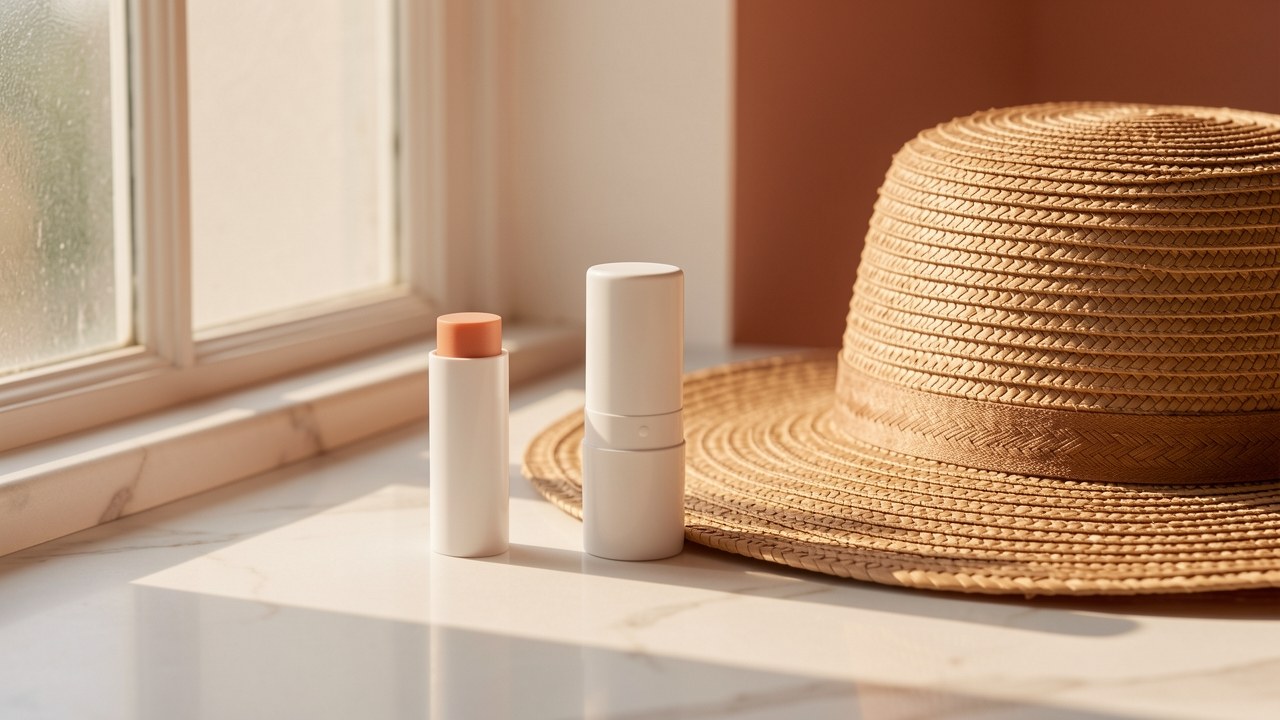
Why lips need their own sun protection
Lip skin is not like the skin on your forearm. It is thinner than skin elsewhere on the body, contains virtually no melanin, and has no oil glands, so it has very little built-in defence against ultraviolet rays. That combination means sun damage can build up on the lips faster than many people expect, and it can happen on an ordinary commute or a walk at lunchtime, not only during a beach day.
Because lips also dry out easily, sun exposure tends to show up as more than colour. Chronic unprotected exposure is linked with dryness, chapping, sunburn, blistering, fine lines, volume loss and discolouration. The lower lip faces the sun more directly than the upper lip, so it is usually the first place where changes appear.
There is a more serious side to this. Repeated unprotected exposure is associated with actinic cheilitis, a precancerous condition that can progress to squamous cell carcinoma. One source reports that about 90 percent of lip cancers occur on the lower lip, though that figure traces back to a page outside this guide's research set and should be treated as indicative rather than definitive.
- Lips are thinner than other skin
- They contain virtually no melanin for natural UV defence
- They have no oil glands to help maintain a protective barrier
- Dryness, chapping and colour change are common early signs of sun exposure
Sources: Standard Procedure, Prequel, e.l.f. Cosmetics
Reading the label: SPF, broad-spectrum and sunscreen actives
The first thing to check on any lip product is whether it states an SPF value at all. A tinted balm or gloss without a declared SPF is a cosmetic product, not a sun-protection product, and it is not giving you meaningful UV defence no matter how good it feels. If the label lists no SPF and no recognised sunscreen actives, treat it as ordinary lip colour or moisture care.
SPF on its own refers to UVB protection. Broad-spectrum is the claim that tells you the formula also covers UVA. For everyday wear, the general guidance is a broad-spectrum SPF 30 balm with moisturising ingredients; for extended time outdoors, sport or swimming, an SPF 50 formula gives a larger safety margin. Those are selection guidelines, not a personal recommendation, and different sources draw the line in slightly different places.
Look at the active ingredients list as well as the front of the pack. SPF lip products use either mineral filters such as zinc oxide and titanium dioxide, or chemical filters such as avobenzone and octinoxate. If you plan to swim or sweat heavily, check for a water-resistance claim, which states how long the product is designed to stay effective, typically 40 or 80 minutes.
- No declared SPF means no claimed sun protection
- SPF covers UVB; broad-spectrum adds UVA coverage
- SPF 30 broad-spectrum is a common everyday baseline
- Look for named actives: zinc oxide, titanium dioxide, avobenzone, octinoxate
- Check the water-resistance duration if you swim or sweat
Sources: Eclair Lips, Standard Procedure, WellnessBetter
What sun exposure can do to lips over time
Sun damage on the lips is cumulative, which is why the habit matters more than any single application. Short unprotected exposures add up over years, and the visible results tend to appear gradually: persistent dryness, a rough texture, a fading or blurring lip line, and a loss of fullness as collagen support declines. A one-off sunburn on the lips can blister and peel, and the lower lip is usually the most affected.
Cold sores are another point worth knowing about. One source states that ultraviolet exposure can trigger cold sore flare-ups and that using an SPF lip balm may reduce UV-triggered outbreaks. That claim comes from a single source without further citation, so it is worth discussing with a clinician if cold sores are a recurring problem for you rather than treating it as established fact.
Because actinic cheilitis can develop quietly, persistent changes deserve attention rather than another layer of balm. A sore that does not heal, a growing rough patch, or a colour change that stays put is a reason to see a clinician.
- Cumulative exposure matters more than any single day
- Visible signs include dryness, roughness and loss of fullness
- The lower lip is typically the most exposed and affected
- Persistent changes should be assessed professionally
Sources: Standard Procedure, e.l.f. Cosmetics
SPF balm, SPF gloss and tinted SPF balm compared
The format you choose changes how reliably protection stays on your lips. Stick balms are built with waxes, butters and emollients, which gives them a denser film that anchors sun-protective ingredients to the lip surface. Glosses are lighter and more slippery; they can still protect well when they contain effective sunscreen actives, but the finish tends to need a balm base underneath for dependable coverage. Tinted balms sit in between, combining sun protection with a wash of colour and hydration.
The table below compares the three formats on the points that affect a daily decision: protection strength, when to choose each one, how they layer with colour, and what to verify on the label.
- Balm first if you want the most reliable everyday base
- Gloss works best layered over an SPF balm, not instead of one
- Tinted balm is the simplest single-step option for colour plus protection
| Format | Protection strength | Best for | Reapplication | Layering with colour | What to verify on the label |
|---|---|---|---|---|---|
| SPF lip balm (stick) | Denser wax, butter and emollient formulation that anchors sunscreen actives to the lip surface | Everyday use, commuting, errands, outdoor work, extended or intense sun, swimming and sport | At least every 2 hours during sun exposure, and immediately after eating, drinking, swimming or sweating | Works as a protective base under lip liner, gloss or lipstick | Broad-spectrum, SPF 30 or higher, water resistance if relevant, gentle non-irritating formula |
| SPF lip gloss | Lighter, glossier formulation; can protect well when it contains effective sunscreen actives, but the glossy finish may need a balm base for reliable coverage | When a high-shine, colour-forward finish is wanted | General lip reapplication timing applies: at least every 2 hours and after eating, drinking or swimming | Best used over a moisturising SPF balm base rather than as a standalone protective layer | Broad-spectrum SPF, named sunscreen actives, and a sufficient SPF value |
| Tinted SPF lip balm | Combines sun protection with a hint of colour; colour and protection should be distributed evenly throughout the product | When you want daily sun protection and hydration with a wash of colour instead of a clear finish | Same general timing as other SPF lip products | Can be worn alone as colour plus SPF, or under a gloss for shine | Broad-spectrum, SPF 30 or higher, and consistent colour and protection distribution |
Sources: Colorescience, Eclair Lips, Standard Procedure, WellnessBetter, Prequel
A realistic reapplication routine when you also wear lip colour
Reapplication is where most lip protection routines break down, because reapplying feels like it will ruin your colour. The practical answer is to build protection into the day rather than treating it as a single morning step. Dermatology-oriented guidance consistently points to recoating at least every two hours during sun exposure, and immediately after meals, drinking, swimming or sweating.
A layering approach makes this easier: start with a moisturising SPF balm as a protective base, then add lip gloss, liner or lipstick on top. When it is time to reapply, take the colour off or thin it down, put the SPF balm back on, and rebuild your colour over it. That keeps the sun-protection layer where it needs to be instead of diluting it under repeated coats of colour.
If you prefer a minimal routine, a tinted SPF balm lets you refresh colour and protection in one step. Either way, the two-hour mark is the trigger, not a feeling that your lips still look fine. Most people do not apply enough product to reach the full protection printed on the label, which is another reason to apply generously and refresh often.
- Apply an SPF balm as your base layer before you leave for the day.
- Add gloss, liner or lipstick on top if you want colour.
- Reapply the SPF balm at least every two hours in the sun.
- Reapply immediately after eating, drinking, swimming or sweating.
- Remove or thin existing colour before rebuilding the SPF layer, then reapply colour on top.
Sources: Standard Procedure, WellnessBetter, Prequel, Colorescience, Eclair Lips
Everyday habits that cut lip sun exposure
Sun protection for lips works better as a set of habits than as one product. UV rays penetrate clouds and reflect off surfaces such as snow and water, so the need does not switch off in winter, on overcast days, or when you are somewhere cold. A lip product with SPF belongs in your bag in every season, not just in summer.
Alongside the product itself, small adjustments reduce how much sun actually reaches your mouth. Many of these cost nothing and do not require you to change your routine much.
- Keep an SPF lip balm in your bag, car or desk so reapplication is not a decision.
- Choose a water-resistant formula for swimming, sailing, skiing and heavy sweating.
- Wear a hat with a brim, which shades the lower lip more than you might expect.
- Use a scarf or high collar in bright snow, where reflected UV is strong.
- Apply before you go out rather than after you feel your lips getting dry.
- Reapply after every drink, snack or meal, since eating removes product.
Sources: Standard Procedure, Prequel
When to seek professional advice for persistent lip concerns
Most dryness and chapping responds to consistent moisturising and sun protection, but some changes should not be managed at home indefinitely. A lip sore, crack or rough patch that persists for weeks without healing is worth a professional assessment. The same applies to a new or changing lump, a colour change that stays in one spot, bleeding that recurs, or numbness.
Actinic cheilitis is the reason this matters. It is a precancerous condition that can progress to squamous cell carcinoma, and it develops on the lower lip, where sun exposure concentrates. It is not something you can identify reliably from a mirror, and this guide is general educational information rather than a substitute for advice from a qualified clinician. If you have a history of significant sun exposure, or you have noticed a persistent change, ask a clinician to look at it.
- A sore or patch that does not heal within a few weeks
- A new lump, thickening or rough area on the lip
- A colour change that stays in one place
- Recurring bleeding or numbness
Sources: e.l.f. Cosmetics, Standard Procedure
What to double-check before buying an SPF lip product
SPF numbers on lip products are easy to misread, especially on tinted products and glosses where the colour distracts from the label. Before you commit to a product, work through the same short check each time, because formulation and packaging change between batches.
Product-specific details such as SPF value, filter types, water-resistance duration and finish come from brand and retailer descriptions of their own products. They are useful as a starting point, but they are not independently verified, so compare the tube in your hand against the claims you read.
- Does it state an SPF value on the packaging?
- Does it say broad-spectrum?
- What are the named sunscreen actives?
- Is there a water-resistance claim, and for how long?
- Does the formula suit your lips if they are sensitive or prone to chapping?
- Is the format one you will actually reapply during the day?
Sources: Eclair Lips, Standard Procedure, Prequel, e.l.f. Cosmetics, WellnessBetter
Frequently asked questions
Do SPF lip balms need to be reapplied like facial sunscreen?
Yes. Lip products are treated like other sunscreens when it comes to timing: dermatology-oriented guidance recommends recoating at least every two hours during sun exposure, and immediately after eating, drinking, swimming or sweating. Lips also lose product faster than the face, because eating, drinking and talking all move it around, which is why the after-meal reapplication matters as much as the two-hour mark.
Sources: Standard Procedure, WellnessBetter, PrequelCan I apply SPF lip balm under lipstick?
You can, and it is the recommended layering order. Start with a moisturising SPF balm as a protective base, then apply lip liner, lipstick or gloss over it. When you need to reapply, take the colour off or thin it down first, put the SPF balm back on, and rebuild your colour on top. That keeps the sunscreen layer intact instead of burying it under fresh colour.
Sources: Colorescience, PrequelAre tinted lip products with SPF enough on their own?
A tinted SPF balm can work as a single-step option if it carries a broad-spectrum SPF 30 or higher and the colour and protection are distributed evenly through the product. The risk is tinted products that carry colour and moisture without a declared SPF: those are cosmetics, not sun protection. Check the packaging rather than assuming that a pigment or a pleasant texture means UV coverage.
Sources: Eclair Lips, Standard ProcedureDoes SPF in lip gloss wear off faster than in a stick balm?
Glosses are typically lighter and more slippery than stick balms, and a stick balm's denser wax, butter and emollient base keeps sunscreen actives anchored to the lip surface more reliably. That does not mean an SPF gloss cannot protect, but for dependable coverage the more reliable pattern is to apply a moisturising SPF balm first and add gloss over it for shine.
Sources: Colorescience, Eclair LipsIs SPF 25 enough, or should I use SPF 30 or 50?
Sources do not agree on a single threshold. One brand recommends SPF 25 or higher on a lip balm or gloss; broader guidance points to broad-spectrum SPF 30 as the everyday baseline and SPF 50 for extended or intense exposure. There is no single authoritative minimum established for lip products in this material, so treat SPF 30 broad-spectrum as a sensible everyday choice and step up for sport, water and long days outside.
Sources: e.l.f. Cosmetics, Eclair Lips, Standard ProcedureDo I need an SPF lip balm in winter or on cloudy days?
Yes. UV rays penetrate clouds and reflect off surfaces such as snow and water, so the need for lip protection does not disappear on overcast days or in cold weather. Snow reflection is a particular concern because it sends UV upward towards the lower lip. Keeping an SPF balm in your bag year-round avoids having to remember it seasonally.
Sources: Standard ProcedureWhat should I look for on the label besides the SPF number?
Check whether it says broad-spectrum, which indicates UVA coverage as well as UVB, and look at the active ingredients. SPF lip products use either mineral filters such as zinc oxide and titanium dioxide, or chemical filters such as avobenzone and octinoxate. If you swim or sweat heavily, look for a water-resistance claim and note whether it states 40 or 80 minutes.
Sources: Eclair Lips, Standard Procedure, WellnessBetterWhen should I see a doctor about a lip problem instead of just using more balm?
A sore, crack or rough patch that does not heal over a period of weeks is the main signal to get it checked. The same goes for a new lump or thickening, a colour change that stays in one spot, recurring bleeding, or numbness. Repeated unprotected sun exposure is associated with actinic cheilitis, a precancerous condition that can progress to squamous cell carcinoma, and it develops most often on the lower lip, where sun exposure is concentrated.
Sources: e.l.f. Cosmetics, Standard ProcedureSources
- Why It's Important to Wear SPF Lip Gloss and Balm on Your Lips | e.l.f. Cosmetics — e.l.f. Cosmetics
- Best SPF Lip Balm: Complete Guide to Sun Protection for Lips — Eclair Lips
- SPF Lip Balm vs Gloss: Which Protects Your Lips Better? – Colorescience — Colorescience
- Lip Balm with SPF - Delicate Skin Care | Standard Procedure — Standard Procedure
- Coppertone Sport Spf 50 Sunscreen Lip Balm, Lip Sunscreen, Lip Balm With Spf, 0.13 Oz – WellnessBetter — WellnessBetter
- Why You Need Lip Sunscreen - SPF Lip Balm For Sun Protection – Prequel — Prequel