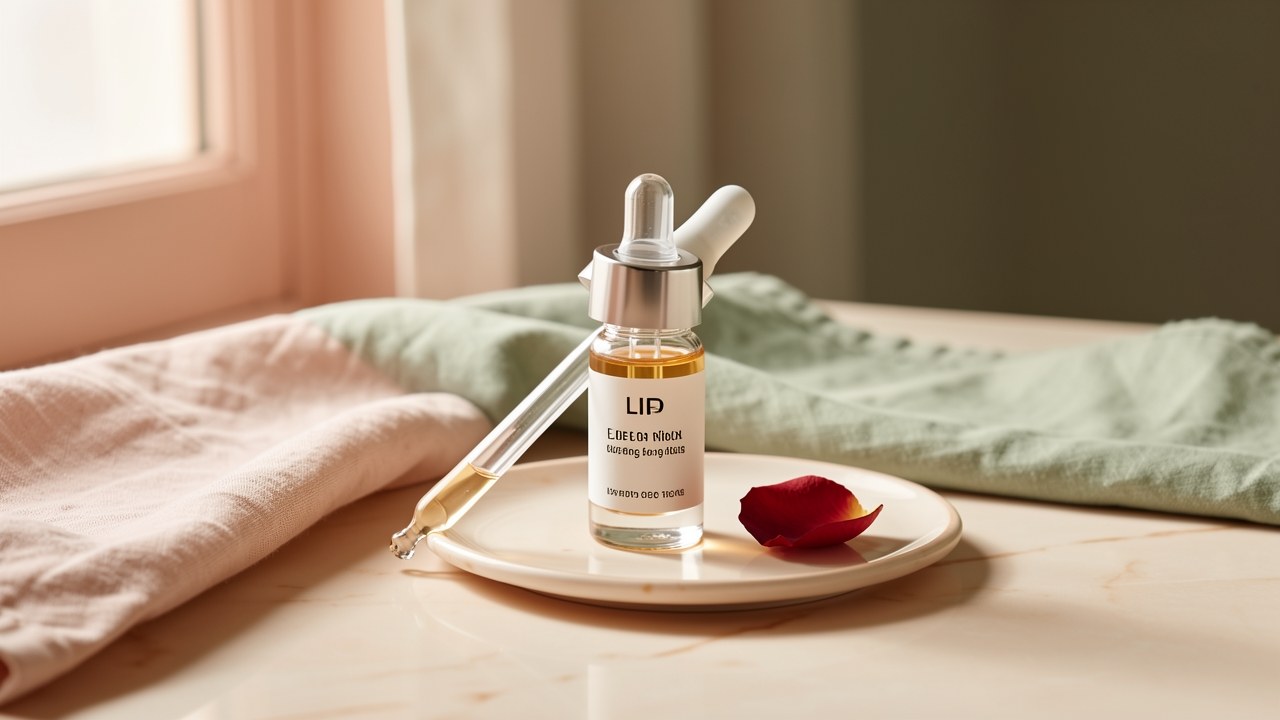
What lip oil is and how it is formulated
Lip oil is usually described as a hybrid of makeup and skincare. It is built to give lips a gloss-like shine while the formula is designed to condition them as you wear it, which is why brands often frame it as a finishing skincare step rather than purely a colour product.
The ingredient story follows from that positioning. Lip oils are commonly formulated with botanical or plant-derived oils such as jojoba, shea butter, castor seed oil, sunflower seed oil, rose hip oil or meadowfoam. Some formulas also add hyaluronic acid or peptides, and reviewers note that experts look for emollients such as vitamin E, squalane and jojoba oils. Exact ingredient lists differ from product to product.
The name is applied loosely. After testing 40 products sold as lip oils, one independent reviewer observed that many of them do not feel like a true oil at all. There is no single standardized definition separating lip oil from lip gloss or lip balm across the brand editorials and review sources that describe the categories, so the label on the tube tells you less than the texture and finish inside it.
- Formula family: plant-derived oils, butters and emollients, sometimes with hyaluronic acid or peptides
- Positioning: shine plus conditioning in one step, rather than colour alone
- Naming caveat: products labelled lip oil vary widely in how oily they actually feel
- No agreed industry dividing line between oil, gloss and balm
Sources: VIEVE, Rodan + Fields (The Skincare Source), Osmosis Beauty, Abbey Yung (YouTube), NYT Wirecutter
Lip oil versus gloss versus balm: feel, finish, and wear
Feel is the clearest difference. Lip oils are typically thinner and more fluid than lip gloss, which is generally thicker and richer. Gloss is also described as more likely to feel tacky or sticky, while lip oil is described as smoother and more comfortable for everyday wear. Balm plays a third role again: thicker than oil, and designed to form a longer-lasting protective layer rather than a shine.
Finish separates them just as clearly. Lip oil and gloss both aim for shine, but gloss leans on waxes, pigments and polymers to hold colour and shine in place, while oil formulas lean on oils and skincare actives. Balm is the least glossy of the three and the most occlusive.
Wear time is where the categories get less predictable. Lip oils are generally described as wearing away more quickly than thicker gloss formulas as the lighter formula absorbs or fades, and reviewers of oil-like products report shine fading fairly quickly. Thicker gloss can last longer than oil, though reflective gloss finishes have also been observed wearing off within a couple of hours in testing. Treat wear as a range of experience rather than a fixed number.
Two limits are worth keeping in mind. First, the roughly two to three hours often quoted for lip oil worn alone comes from brand application guidance rather than independent measured wear testing. Second, the claim that oil creates a barrier that reduces the dryness matte lipsticks can cause appears only in brand editorial writing, with no independent verification in the sources reviewed here.
| Aspect | Lip oil | Lip gloss | Lip balm |
|---|---|---|---|
| Texture | Thinner and more fluid | Generally thicker and richer | Thickest of the three; protective layer |
| Feel on lips | Smooth, low tack | More likely to feel tacky or sticky | Cushioning, waxy, sometimes heavy |
| Finish | Glossy shine, softer reflectivity | High shine, often highly reflective | Satin to low sheen depending on formula |
| Typical wear | Fades as it absorbs; often needs topping up | Can outlast oil when thick, though reflective finishes can wear off within a couple of hours | Stays put longest; can break down lipstick if not blotted |
| Main job | Shine plus conditioning in one step | Colour and shine | Protection and comfort |
Sources: VIEVE, Revlon US, NYT Wirecutter, Rodan + Fields (The Skincare Source), Jouer Cosmetics
Tinted and untinted lip oils and typical color payoff
Both formats exist on the market. Clear or untinted lip oils focus on shine and conditioning, while tinted formulas add a wash of pigment in the same step as hydration and shine. Independent testing of dozens of lip oils treats tint as a distinct judging criterion alongside shine, longevity, texture and stickiness.
Colour payoff is usually sheer. Across a 40-product wear test, tint was reported as strongly variable and often very faint, with some products showing little visible pigment at all; one oil in a separate test stood out for carrying noticeably more pigment than the others tried. Brand comparison writing also notes that gloss generally offers a wider range of colour choices than oil.
If colour is the priority, a tinted oil will read as a soft wash rather than full coverage, and the depth you get depends heavily on the individual product rather than on the category. If comfort and shine are the priority, an untinted oil does the same job without adding pigment.
- Untinted: shine and conditioning only
- Tinted: a sheer wash of colour in the same step as shine
- Payoff varies widely between products and is often very sheer
- Gloss formats generally offer a broader colour range than oils
Sources: Revlon US, NBC News Select, Abbey Yung (YouTube), VIEVE
How to layer lip oil with liner, lipstick, or balm
Lip oil works both under and over colour, but the order and the timing change the result. Used as a prep step before lipstick, it should be allowed to absorb and then blotted before colour goes on, so the colour does not slide. Brand guidance suggests waiting roughly 60 to 90 seconds and blotting lightly before applying lipstick over the top.
Worn over colour, the finish of the lipstick underneath matters. Applying oil over matte lipstick is described as breaking down the matte finish, softening it and restoring shine and moisture. Applying it over cream or satin lipstick is described as adding gloss without significantly disrupting the colour.
Balms behave differently again. Because a balm forms a thicker occlusive layer, it can break down lipstick underneath if it is not blotted first. If you want the comfort of a balm and the colour of a lipstick, blot after the balm and before the colour.
- Exfoliate and let the lips settle if you are prepping for colour.
- Apply a thin base layer of lip oil if you want conditioning under lipstick.
- Wait about 60 to 90 seconds for it to absorb.
- Blot lightly so the surface is not slippery.
- Apply lipstick or liner as usual.
- For shine on top, press oil onto the centre of the lips and blend outward rather than sweeping it edge to edge.
Sources: Revlon US
Reapplication and wear expectations through the day
Because the formula is light, lip oil is a product you top up rather than apply once. Brand application guidance puts reapplication at roughly every two to three hours when lip oil is worn on its own. That figure is brand guidance rather than a measured wear result, so treat it as a starting rhythm and adjust to what you see in the mirror.
In practice, two things fade at different rates. The shine goes first, especially after eating, drinking or talking, while the emollient feel can linger after the gloss has gone. That means a lighter top-up is often enough to bring the shine back without layering product on top of product.
Keep a few practical expectations in mind: the lighter the formula, the sooner it needs refreshing; meals and drinks reset the clock almost entirely; and if you have layered oil over lipstick, reapplying oil will gradually soften that lipstick's finish.
- Brand guidance suggests topping up roughly every two to three hours when worn alone
- Shine fades before the conditioning feel does
- Eating and drinking shorten wear noticeably
- Over lipstick, each oil top-up softens the finish a little more
Sources: Revlon US, The Beauty Crop, VIEVE, NYT Wirecutter, Abbey Yung (YouTube)
Choosing lip oil for shine versus everyday comfort
The choice usually comes down to which half of the product you care about more. If you want maximum mirror-like shine and a finish that holds its reflective look, a thicker gloss is often the stronger pick, because oil formulas trade some staying power for a lighter feel. If you want something you can wear all day without noticing it, oil is usually the more comfortable option.
For everyday comfort, the deciding factors are texture and tack rather than colour. Lip oil is described as distinctly thinner than gloss and as removing the tacky feel some traditional glosses have. That makes it a reasonable choice if you dislike the sensation of a heavy layer on your lips, or if you want conditioning to happen while you wear colour.
For shine specifically, decide how often you are willing to reapply. A high-shine oil looks best fresh and will need regular top-ups; a thicker gloss may hold its look longer but feel heavier. Neither is better in the abstract.
A note on marketing language: the term oil is used loosely, so judge a product by how it actually feels and wears rather than by the word on the label. Some treatment-forward formats also advertise skincare ingredients such as peptides, hyaluronic acid, vitamin F or SPF. Those are formulation claims rather than evaluated results, so treat them as product descriptions, not proof of an outcome.
- Choose oil for lightweight feel and all-day comfort
- Choose a thicker gloss if shine retention matters more than weight
- Tinted oils suit a sheer wash; clear oils suit shine and conditioning
- Judge by texture and wear, not by the word oil on the packaging
- Treatment ingredient claims describe the formula, not a verified result
Sources: VIEVE, Revlon US, Rodan + Fields (The Skincare Source), NBC News Select, Abbey Yung (YouTube)
Side-by-side decision criteria
The table below is a decision aid rather than a ranking. Each row names a criterion you can judge for yourself, and what tends to point toward a lip oil versus a thicker gloss or a balm. Use it alongside your own priorities on feel, finish and how often you are happy to reapply.
Testing of lip products generally judges shine, longevity, tint, texture and stickiness rather than any single performance metric, so it is reasonable to weigh the same criteria yourself when deciding between categories.
| Criterion | Points toward lip oil | Points toward gloss | Points toward balm |
|---|---|---|---|
| Weight on lips | You want the lightest layer of the three | You can tolerate a heavier, richer layer | You want a thick, cushioned layer |
| Tackiness | You dislike sticky or tacky finishes | Tackiness is acceptable for the finish | Some balms feel waxy rather than tacky |
| Finish | Soft, glossy shine is enough | You want a highly reflective shine | You want low sheen and protection |
| Colour | A sheer wash is enough | You want the widest colour range | You usually wear no colour |
| Wear length | You are happy to top up during the day | You want the finish to hold longer | You want the longest-wearing layer |
| Layering with lipstick | You want to add shine over cream or satin colour | You want shine as the main event | You want to prep underneath, blotted first |
Sources: VIEVE, Revlon US, NYT Wirecutter, Rodan + Fields (The Skincare Source), NBC News Select, Abbey Yung (YouTube)
Frequently asked questions
Is lip oil the same as lip gloss?
No, although the two are often grouped together. Lip oil is typically thinner and more fluid than lip gloss, and it is usually described as smoother and less tacky. Lip gloss formulas lean more on waxes, pigments and polymers to hold colour and shine, while oil formulas lean on oils and skincare-type ingredients. Lip oil is also positioned as part makeup, part skincare, delivering shine while the formula conditions the lips. That said, the naming is loose, and some products sold as lip oils behave much like a gloss.
Sources: VIEVE, Revlon US, Rodan + Fields (The Skincare Source), Jouer CosmeticsHow long does lip oil usually last before reapplication?
Brand application guidance suggests reapplying roughly every two to three hours when lip oil is worn on its own. This is brand guidance rather than a measured wear figure, so expect variation. In practice the shine fades before the conditioning feel does, and eating, drinking or talking will shorten wear. Oil-based formulas are generally described as wearing away more quickly than thicker, glossier formulas.
Sources: Revlon US, The Beauty Crop, VIEVE, NYT WirecutterCan lip oil be worn under lipstick?
Yes. Apply a thin layer as a prep step, let it absorb for about 60 to 90 seconds, and blot lightly before applying colour so the lipstick does not slide. Worn over the top, the effect depends on the lipstick finish: over matte lipstick, oil breaks down the matte look and restores shine, while over cream or satin lipstick it adds gloss without disrupting the colour much.
Sources: Revlon USDoes lip oil help with dry lips?
Lip oil is designed to condition the lips while it is worn, and it is often formulated with plant-derived oils and emollients such as jojoba oil, shea butter, castor seed oil or squalane. That makes it a reasonable option if you want conditioning and shine in one step. Lip oil is still lighter and faster-absorbing than lip balm, which is thicker and forms a longer-lasting protective layer, so if protection is the main goal a balm plays a different role. Claims that oil creates a barrier against dryness from matte lipstick come from brand editorial writing rather than independent testing.
Sources: VIEVE, Rodan + Fields (The Skincare Source), NYT Wirecutter, Revlon USSources
- How to Layer Lip Oils for Shine, Hydration, and Long-Lasting Wear — Revlon US
- Lip Oil vs Lip Gloss: What Works Best For You? — VIEVE
- Tinted Lip Oil vs Lip Gloss: Key Differences Explained — Jouer Cosmetics
- I Tried 40 Lip Oils So You Don’t Have To... Lip Oil Showdown! — Abbey Yung (YouTube)
- The 5 Best Lip Glosses and Oils — NYT Wirecutter
- Lip Oil vs Lip Balm: Which One Is Right for Your Lips? — Rodan + Fields (The Skincare Source)
- The Best Lip Oils for Hydrated, Glossy Lips, Tested and Reviewed — NBC News Select
- Lip Gloss vs Lip Oil — Rodan + Fields (The Skincare Source)
- Lip Oil Before Lipstick: How to Prep for Super Lustrous Ultra — Revlon US
- What Is Lip Oil and What Does It Do for Your Lips? — Osmosis Beauty
- Everything you need to know about lip oils — The Beauty Crop
- Best Lip Oil in 2026 — Rodan + Fields (The Skincare Source)