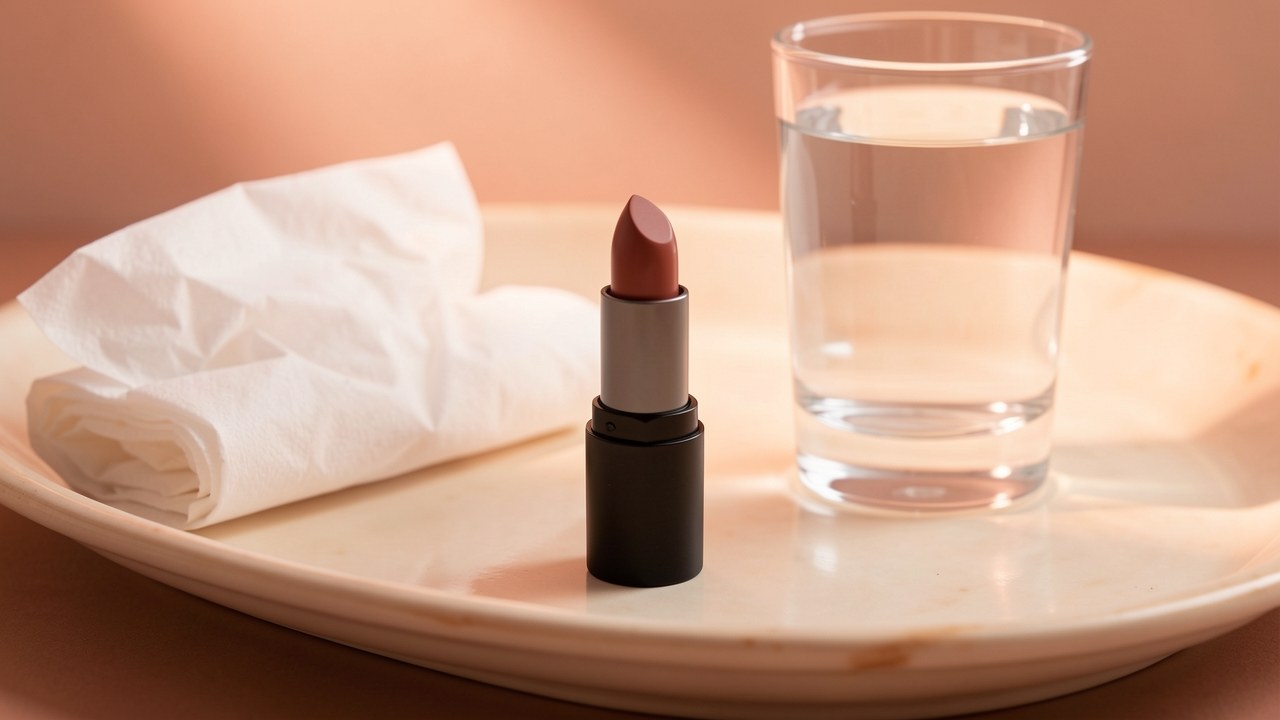
What causes transfer on lip products
Most traditional lipsticks are made of pigment suspended in oils and waxes. When you apply them, the color sits on top of your lips as a thin film. That film can be disrupted by oils from food, friction from drinking or wiping, and even by talking. When the film breaks down, pigment can end up on cups, straws, teeth, or clothing.
The specific triggers vary. Hot beverages and oily foods can soften the film, while rubbing or pressing your lips together can physically move the color. This is different from fading, which happens gradually as the product wears away. Transfer is about color coming off onto something else.
- Oils in food and drinks can break down the lipstick film.
- Friction from cups, straws, or wiping moves color off the lips.
- Heat and humidity can make some formulas softer and more prone to smudging.
- Even everyday talking can cause slight movement of the product.
Sources: Kaberryfls, Banffee Makeup, House Of Makeup
How base preparation affects transfer
The condition of your lips before you apply color can influence how well it stays put. Dry, flaky lips create an uneven surface, which can make any lipstick sit less smoothly and wear away faster. Exfoliating gently to remove dead skin, then applying a thin layer of lip balm, is a common recommendation. Just be sure to blot away any excess balm before applying color, because too much slip can prevent the color from gripping.
If you use lip liner, applying it across the entire lip area—not just the outline—can create a base that helps other products adhere. This is a technique described by multiple makeup sources, though it has not been measured in controlled tests. For many people, it makes a noticeable difference in how long color lasts and how much it transfers.
- Exfoliate gently to smooth the lip surface.
- Apply a thin layer of balm, then blot off the excess.
- Consider using lip liner as a full base, not just an outline.
- Avoid heavy balms or oils right before applying long-wear formulas.
Sources: Banffee Makeup, House Of Makeup, Vogue, LipstickQueen, HairSpeaks
Wax-based versus film-forming versus oil-based behavior
Lip products fall into broad categories based on how they are formulated, and that affects how likely they are to transfer. Traditional bullet lipsticks use waxes and oils as a carrier; the color rests on the surface and can be easily rubbed off. Long-wear lipsticks may have a higher wax content and a drier texture, which gives them moderate adhesion, but they still transfer more than film-forming products.
Film-forming liquid matte lipsticks contain polymers that create a flexible film on the lips. These are designed to bond with the lip surface and resist transfer once they set. They often require a short drying period after application. Lip stains work differently: the dye penetrates the outer layer of lip skin rather than sitting on top, so the color is less likely to come off on contact. Glossy or moisturizing products, on the other hand, rely on oils and emollients that can interfere with film formation, so they typically transfer more readily.
| Product category | How it works | Transfer resistance | Typical finish |
|---|---|---|---|
| Regular bullet lipstick | Wax and oil carrier; pigment rests on lip surface | Very low | Creamy, glossy, satin |
| Long-wear lipstick | Higher wax content; drier formula; moderate adhesion | Low to moderate | Matte to satin |
| Transfer-proof liquid matte | Film-forming polymers bond pigment; solvent evaporates | High to very high | Matte, powdery, velvet |
| Lip tint or stain | Dye penetrates outer lip skin layers | Very high | Sheer to medium; natural |
| Lip liner as base | Waxy formula grips lip surface and holds other products | Moderate (best as base) | Matte, semi-matte |
Sources: House Of Makeup, Kaberryfls, Banffee Makeup, Vogue
Blotting, powdering, and setting methods and their trade-offs
Blotting is a simple technique: after applying lipstick, press a tissue between your lips to remove excess product. You can then apply another thin layer and blot again. This can reduce the amount of color that comes off on cups and straws. However, blotting also removes some of the color, so you may need to reapply more often.
Another method is to apply a thin layer of translucent powder over the lipstick, either directly or through a tissue. This can help set the color and reduce transfer, but it may change the finish to a more matte texture and can be drying. Setting sprays are sometimes used, but their effectiveness on lips is not well documented in the sources reviewed for this guide.
The trade-off with any setting method is that you may sacrifice some comfort or shine for longer wear. Matte finishes tend to be more drying, and powder can emphasize lip lines. If your lips are dry or sensitive, you may want to use these techniques sparingly.
- Blot with a tissue after applying lipstick to remove excess.
- Apply a second thin layer and blot again for extra staying power.
- Powder through a tissue can set the color but may dry lips.
- Setting sprays are not well supported for lip transfer reduction.
Sources: LipstickQueen, HairSpeaks, Quora, Vogue
Drinking, eating, and talking habits that reduce smudging
How you eat and drink can make a difference. Using a straw reduces direct contact between the cup and your lips, which limits friction. For hot drinks, letting them cool slightly before sipping can help, since heat can soften the lip color film. When eating, try to avoid oily foods that can break down the product, or gently blot your lips afterward.
Talking is another source of friction. If you are wearing a long-wear formula, try not to press your lips together excessively. Some people find that keeping lips slightly apart when not speaking helps. Of course, these are small adjustments; they may not eliminate transfer entirely, but they can reduce it.
- Use a straw for cold drinks to minimize contact.
- Let hot drinks cool a bit before sipping.
- Avoid oily foods or blot lips after eating them.
- Try not to press lips together too often.
Sources: Kaberryfls, House Of Makeup
Touch-up routines for a transfer-prone day
Even with the best techniques, some transfer is normal. A simple touch-up routine can help you maintain a polished look. Start by blotting your lips with a tissue to remove any excess oil or faded color. If you are using a film-forming lipstick, apply a thin layer and wait for it to set before adding another layer. For traditional lipstick, you may need to reapply more often, but blotting between layers can help it last a bit longer.
Carry a small mirror and the products you need for touch-ups. If you notice color on your teeth, a quick wipe with a tissue or your finger will remove it. For clothing stains, treat them as soon as possible with a stain remover, but be careful not to rub the stain further into the fabric.
- Blot lips with a tissue to remove excess product and oil.
- Apply a thin layer of lip color, starting from the center and moving outward.
- For film-forming formulas, wait for the recommended setting time before adding another layer.
- Blot again lightly if needed.
- Check teeth and gently wipe away any color.
Sources: LipstickQueen, House Of Makeup
When transfer signals the product is the wrong category for the occasion
If you find that your lip color transfers heavily no matter what you do, it may be a sign that the product category is not suited to the situation. For example, a glossy bullet lipstick is likely to transfer during a meal, while a film-forming liquid matte or a lip stain is designed to stay put. If you need color that lasts through eating, drinking, and talking with minimal transfer, you may want to switch to a different type of product.
That said, no product is completely transfer-proof in every situation. The terms transfer-proof and transfer-resistant are not regulated, so a product labeled as such may not perform as you expect. If you have an important event, consider testing your product beforehand to see how it holds up.
- Glossy and creamy formulas transfer more easily.
- Film-forming liquid mattes and stains are designed to resist transfer.
- Labels like transfer-proof are not standardized.
- Test products before relying on them for a special occasion.
Sources: Kaberryfls, House Of Makeup, Quora, Vogue
Frequently asked questions
Does blotting lipstick really reduce transfer?
Blotting removes excess product from the surface of your lips, which can reduce the amount of color that comes off on cups and straws. It is a commonly recommended step, though there is no measurement of exactly how much transfer is reduced. You may need to reapply more often because blotting also removes some color.
Sources: LipstickQueen, HairSpeaksWhy does lipstick end up on my teeth?
Lipstick can get on your teeth when you press your lips together or when the product is applied too close to the inner edge of your lips. It can also happen if the formula does not set completely. To avoid this, apply lipstick slightly inside the lip line, then blot and check your teeth in a mirror. Using a long-wear or transfer-resistant formula may reduce the likelihood.
Sources: LipstickQueen, House Of MakeupIs matte lipstick less likely to transfer?
Matte formulas, especially those that are film-forming, tend to adhere more strongly and last longer than satin or glossy finishes, which can make them less likely to transfer. However, matte lipsticks can be more drying and may feel uncomfortable on dry or sensitive lips. The specific transfer resistance depends on the formulation, not just the finish.
Sources: Banffee Makeup, House Of MakeupCan lip liner stop transfer onto cups?
Lip liner can help by creating a base layer that other products grip onto. Applying liner across the entire lip, not just the outline, is a technique that may improve longevity and reduce feathering. It is not a guarantee against transfer, but it can be part of a routine that minimizes it. The effect is not measured in controlled studies.
Sources: LipstickQueen, House Of Makeup, HairSpeaksSources
- Lip Stain: Long-Lasting Color Without The Transfer — Kaberryfls
- How to Make Lipstick Transfer-Proof — LipstickQueen
- The Top Transfer Proof Lipsticks for Drinking and Eating — Banffee Makeup
- Transfer-Proof Lipstick 101: What Makes a Lipstick Actually Transfer-Proof and How to Apply It Right — House Of Makeup
- End the Lipstick Transfer Nightmare: Learn the Insider Tips to Keep Your Pout Perfect — HairSpeaks
- What's the best way to make my lipstick transfer proof so that when I kiss, it doesn't get on his lips? — Quora
- 10 Best Transfer-Proof Lipsticks That Literally Won’t Budge — Vogue