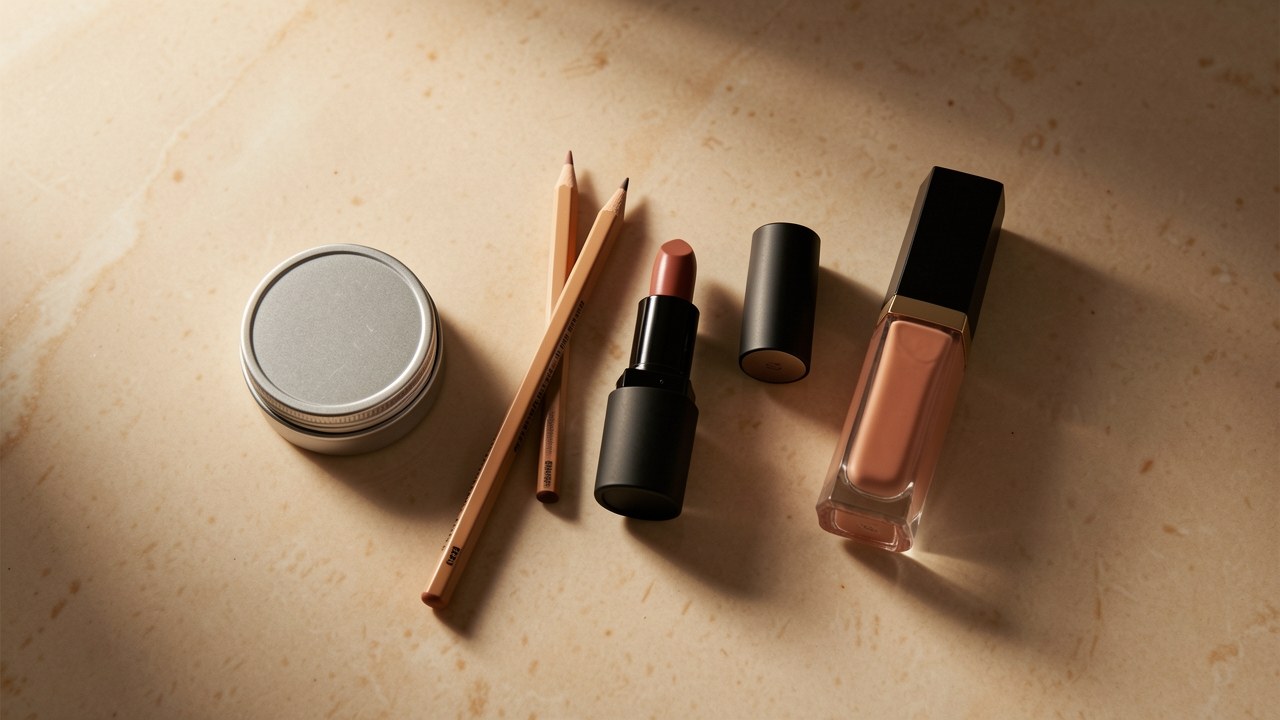
Why layering order changes finish and wear
Lip products are not all built the same way. Balms rely on a balance of waxes, oils, and butters; glosses are usually oil-based or gelled oil systems; and long-wear lacquers or liquid lipsticks depend on film-forming systems with precise pigment dispersion. Because these structures behave differently, the order in which you apply them affects how well each layer grips and how the color wears.
A consistent order matters for one practical reason: some layers need to set or absorb before the next one goes on. A lip oil applied before a matte lipstick can prevent the color from adhering properly, while the same oil applied after seals the color and adds shine. Heavy oils applied immediately before lip color can also cause lipstick and liner to slip. When you work in the opposite order, the base layer stays underneath and the top layer does the finishing work.
Letting each layer settle before adding the next is the simplest habit that helps prevent pilling, the small balls of product that form when layers do not bond.
- Prep first so the surface is even before any color goes on.
- Give absorbent base layers time to sink in before adding color.
- Let matte or long-wear formulas set before adding oil or gloss.
- Apply thin layers rather than one heavy coat to reduce caking and pilling.
Sources: Presperse – Let's Make Beauty, Revlon, Mirabella Beauty, Girlactik
Base layer options: bare lips, thin balm, or primer
The base layer is whatever sits directly on your lips before liner, color, or gloss. There is no single correct choice; the right one depends on the finish you want and how much grip the color above needs.
Bare lips are the simplest base. A natural glow finish works well here because the first product applied sits directly on the lip surface with no intervening film. Dry or flaking lips, however, create an uneven surface that breaks up both color and gloss, so exfoliating first means every product applied above it sits more evenly and blends more cleanly.
A thin balm adds hydration before color, but it has to absorb fully before the next layer goes on so that layer has a clean, stable surface to adhere to. Anything heavier than a thin balm, especially a heavy oil, can cause liner and lipstick to slip if applied right before color.
A primer or a muted base is the third option. Primer is described in general terms as a base that helps grip and longevity. A related technique uses leftover complexion product on a foundation brush or sponge to lightly mute natural lip pigmentation and create a more uniform base before liner, lipstick, and gloss; this comes from a single social media post, so treat it as one option to try rather than a standard method.
- Bare lips: best for a natural glow finish with nothing between color and lip surface.
- Thin balm: good for extra hydration, but let it absorb completely first.
- Primer: described as a base that helps grip and longevity; used before liner and color.
- Muted base: a light layer of leftover complexion product can even out two-toned lips; this is a lower-confidence technique from a single social post.
Sources: Revlon, Mirabella Beauty, Instagram (iamsandyesprit reel), HAYA Beauty - USA
Where liner sits in the order and how much to apply
Lip liner is used to outline the lips, prevent lipstick from feathering, and add depth when layered with lipstick. It also helps products adhere and prevents smudging and feathering. In the most common brand-taught sequence, prep comes first, then liner, then lipstick, then gloss.
Liner goes under lipstick in that standard order, but it can also be worn over a base or blended inward rather than drawn as a hard outline. A light hand works best: outline the shape, then feather the liner inward so the color above it has something to grip without a visible edge.
If you want a softer look, apply liner only where you need definition, usually the outer edges and corners, and blend inward with a brush or fingertip. Keep the liner layer thin unless you are using it as your main color.
- Outline the lip shape with liner, then blend inward before adding lipstick.
- Liner underneath helps prevent feathering and adds depth.
- Keep the liner layer thin if you want a soft, blended edge.
- A soft edge works better than a hard outline for everyday wear.
Sources: Mirabella Beauty, HAYA Beauty - USA
Applying color over a base without pilling
Once the base is ready and the liner is blended, lipstick or another color product goes on next. The main risk at this stage is pilling, when the color layer does not bond cleanly to what is underneath. Letting the base absorb or set fully before you apply color, and applying color in thin coats rather than one heavy pass, helps the layers sit smoothly together.
Thin coats applied with a brush and then blotted, repeated two to three times, build durable color without caking. This method also gives you more control than swiping directly from the bullet, especially over a balm or primer base.
Some highly pigmented long-wear matte formulas are designed to be worn alone. Pairing those with gloss or liner can break down the pigment and shorten wear time. That behavior comes from brand-specific formulation notes and may not apply to every matte product, so test a new combination on a small area first if you are unsure how the two formulas interact.
- Make sure the base layer has absorbed or set completely.
- Pick up a small amount of color with a brush or applicator.
- Apply a thin coat, starting at the center and working outward.
- Blot gently with a tissue to remove excess and even the surface.
- Repeat the thin coat and blot two to three times for durable color.
Sources: Girlactik, Revlon, Mirabella Beauty
Adding gloss or oil as a top layer
Gloss or oil is the finishing layer, and its job is to add shine and seal what is underneath. A widely published five-step order puts lip oil after lip color, not before it, and that order matters: oil applied after color seals the color and adds shine, while oil applied before a matte lipstick can prevent the color from adhering properly.
Matte formulas must be allowed to set before the next layer is applied, because applying oil too soon can pull the color before it has dried down. Once the color is set, apply gloss or oil sparingly.
Applying gloss only to the center of the lips is recommended for a light-reflecting, dimensional effect without excessive feathering. Concentrating shine at the center also draws the eye inward and helps preserve the color beneath. Gloss can be worn alone or layered on top of less reactive products such as matte lipsticks or stains; it is not a universal topper for every formula.
- Wait for matte color to set before adding oil or gloss.
- Apply gloss to the center of the lips first for a dimensional effect.
- Add more only if you want a wetter finish, and avoid dragging the applicator across the color.
- Gloss layers well over matte lipstick or stain; it may not sit well over very emollient bases.
Sources: Revlon, Mirabella Beauty, HAYA Beauty - USA
Combinations that tend to conflict and simple alternatives
Conflicts usually come down to texture and order rather than specific brands. A heavy oil or balm directly under a matte lipstick is the most common problem: the oil keeps the color from adhering properly and can make liner and lipstick slip. If you want both hydration and matte color, use a thin balm, let it absorb fully, then apply the matte color and let it set before adding anything else.
Another conflict is pilling between a rich base and a matte color, or between a gloss and a long-wear matte that is designed to be worn alone. If a combination balls up or breaks down quickly, the simplest fix is to remove the layer that is not bonding and rebuild with fewer products.
Stain formats can be drying, so they are described as best paired with a clear balm, oil, or gloss. Keep the layers thin and give each one time to settle.
| Combination | What tends to happen | Simple alternative |
|---|---|---|
| Heavy oil or thick balm under matte lipstick | Color may not adhere properly and liner or lipstick can slip | Use a thin balm, let it absorb fully, then apply matte color and allow it to set |
| Lip oil applied before matte lipstick | Color may not adhere properly | Apply the matte color first, let it set, then add oil on top |
| Gloss over a highly pigmented long-wear matte designed to be worn alone | Pigment can break down and wear time may shorten | Wear the matte alone, or choose a gloss-friendly formula for layering |
| Tint or stain worn without a top layer | Formats can be drying | Pair with a clear balm, oil, or gloss |
Sources: Mirabella Beauty, Revlon, HAYA Beauty - USA
Quick layering sequences for everyday, work, and evening
These sequences follow the same order but adjust the number of layers and the finish. Use them as starting points, and adjust based on how your products behave together.
Everyday: bare lips or a thin absorbed balm, a light liner blended inward, one thin coat of lipstick or tint, and a touch of gloss at the center. This keeps the finish natural and the routine quick.
Work: a primer or muted base, liner outlined and blended, one or two thin coats of lipstick blotted between coats, and either no gloss or a small amount at the center for comfort. This sequence keeps the layers thin and controlled.
Evening: a thin balm allowed to absorb, liner for definition, two to three thin coats of lipstick blotted between coats, and a gloss or oil applied only after the color has set. If you are using a long-wear matte, check whether it is designed to be worn alone before adding a top layer.
- Everyday: bare lips or thin balm, blended liner, one thin coat of color, center gloss.
- Work: primer or muted base, blended liner, one to two blotted coats of color, optional center gloss.
- Evening: thin absorbed balm, liner, two to three blotted coats of color, gloss or oil after the color sets.
Sources: Revlon, Mirabella Beauty, Girlactik, HAYA Beauty - USA
Frequently asked questions
Does balm under lipstick always cause it to slide?
No. A thin balm that is allowed to absorb fully gives the next layer a clean, stable surface. The problem comes from heavy oils or a thick balm applied immediately before color, which can cause lipstick and liner to slip. If you want hydration under a long-wear color, keep the balm thin and wait until it has sunk in before applying the next layer.
Sources: Revlon, Mirabella BeautyCan I layer tint under lipstick?
The sources describe tint and stain formats as drying on their own, and recommend pairing them with a clear balm, oil, or gloss. They do not describe a specific tint-under-lipstick sequence, so treat that combination as something to test carefully: keep each layer thin and check how the two formulas behave together before relying on it for a full day.
Sources: HAYA Beauty - USAShould liner go under or over lipstick?
Liner usually goes under lipstick. The common brand-taught order is prep, then liner, then lipstick, then gloss. Liner outlines the lips, helps prevent feathering, and adds depth when layered under lipstick. You can also blend liner inward so the color above it has something to grip without a hard edge.
Sources: Mirabella Beauty, HAYA Beauty - USASources
- Perfect Lip Combos: How to Layer Liner, Lipstick & Gloss — Mirabella Beauty
- How to Layer Lip Oils for Shine, Hydration, and Long-Lasting Wear — Revlon
- Lip Makeup Mania: Types of Lip Products, Finishes, and Application Tip — HAYA Beauty - USA
- How to Formulate Lipsticks, Glosses, Balms & Lacquers — Presperse – Let's Make Beauty
- How to Make Lipstick Last Longer — Girlactik
- Instagram — Instagram (iamsandyesprit reel)